Binance Clone Script
  KuCoin Clone Script
  Bybit Clone Script
  Kraken Clone Script
  OKX Clone Script
  ERC-20 Token Development
  TRC-20 Token Development
  BEP-20 Token Development
  Crypto Token Development
  ICO Development
  STO Development
  Binance NFT Clone
  OpenSea Clone Script
  Rarible NFT Clone
  NFT Marketplace Development
  MetaMask Clone Script
  Trust Wallet Clone Script
  Crypto Wallet Development
  DeFi Wallet Development
  Uniswap Clone Script
  PancakeSwap Clone
  SushiSwap Clone
  Crypto Payment Gateway
  Binance Pay Clone
  Crypto MLM Software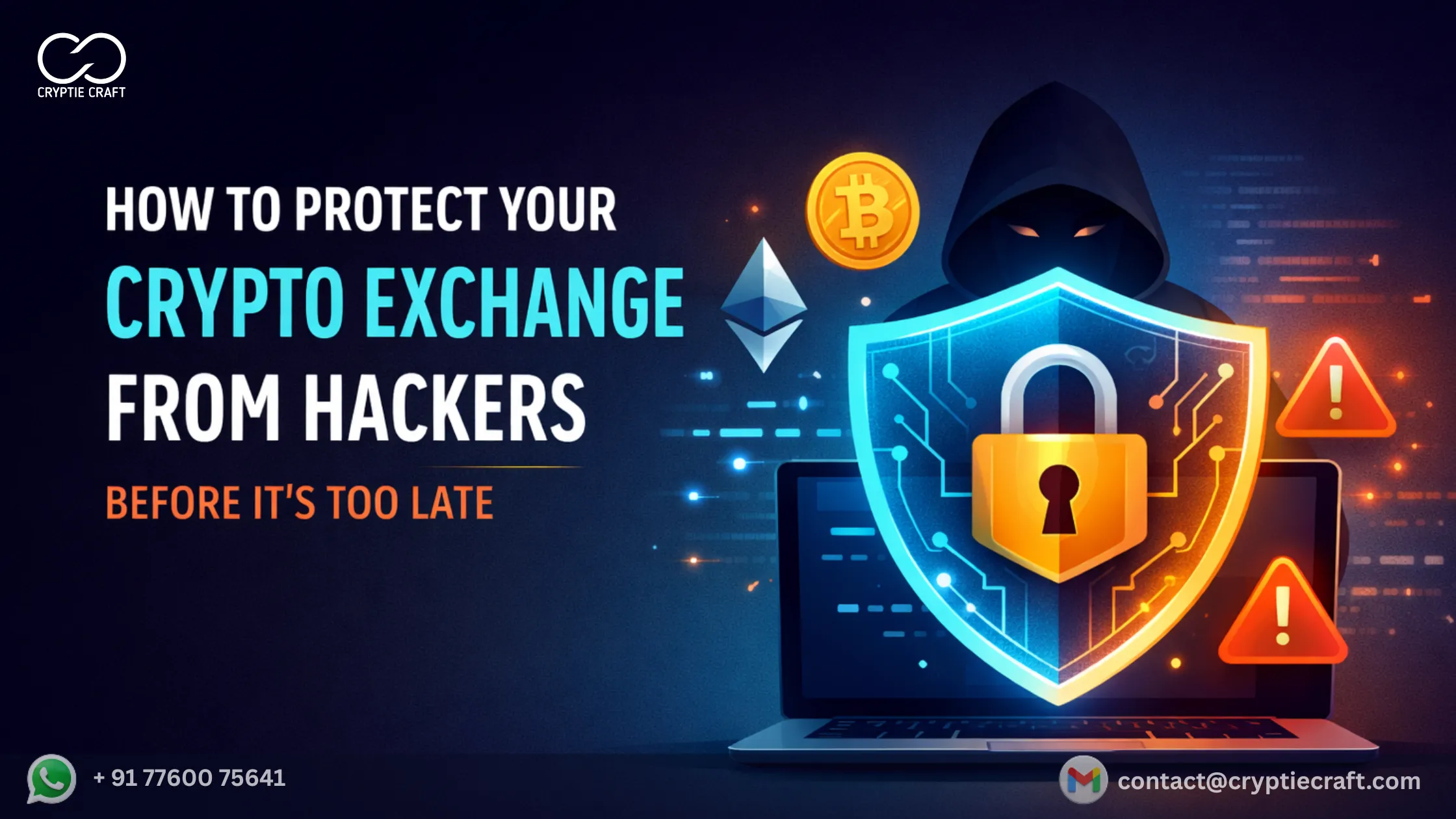
What if you could build a crypto exchange so secure that hackers wouldn’t even attempt to breach it?
In 2025, $2.7 billions vanished from cryptocurrency exchanges through highly sophisticated hacks, devastating the platforms and shattering user trust. But here’s what the headlines won’t tell you: these breaches are preventable.
It is almost impossible to hack the exchanges that remain because they are well protected by top-notch crypto exchange security mechanisms. This blog outlines the precise best practices for blockchain security and tried-and-tested ways to stop cryptocurrency exchange hacks. With the help of threat detection and multi-signature wallets, you will learn how to methodically safeguard cryptocurrency exchange assets. Instead of worrying about making the next news story, start creating an unbreakable castle right now.
What is a Crypto Exchange Hack?
Crypto exchange hack is a type of cyber attack where hackers take advantage of weaknesses in a trading platform in order to steal funds, private keys, or sensitive data of users. Basically, these attacks look for vulnerabilities in the security of wallets, compromised APIs, areas allowing phishing, or poor methods of access control.
It is crucial for a business planning a crypto exchange development to avert hacks to preserve the trust of the customers, comply with the regulations, and secure the digital assets. To be protected from the changing cyber threat landscape, a cryptocurrency exchange platform needs a solid security architecture, round- the-clock monitoring, and a rigorous user verification process.
What are the Types of Cryptocurrency Hacks?
Understanding the attack methods is the first step in the defence. These are eight destructive hacking techniques that target cryptocurrency exchanges, along with how hackers carry them out.
1. Hot Wallet Exploits
Attackers target internet-connected wallets holding active trading liquidity. Weak key management or compromised signing infrastructure enables direct asset theft.
2. Private Key Theft
Cryptographic master keys are exfiltrated via malware, insider threats, or social engineering. A stolen key grants unconditional wallet access, no further authentication required.
3. Smart Contract Vulnerabilities
Flawed code in DeFi protocols creates security faults that attackers can exploit. Attackers drain liquidity pools through re-entrancy attacks and logic errors.
4. Phishing & Social Engineering
Employees fall victim to deceptive emails using fake domains to extract their credentials. Human error remains hackers’ easiest entry point, always.
5. API Manipulation
Unauthorized trading commands become possible through insecure application programming interfaces. Rate-limiting failures and authentication weaknesses enable automated theft.
6. 51% Attacks
Majority control of blockchain mining power enables attackers to reverse transactions. Double-spending attacks threaten smaller cryptocurrency networks with centralized hash power.
7. DDoS Ransom Attacks
The Exchange operation system fails due to excessive server traffic. Hackers demand crypto payment and simultaneously mask sophisticated secondary infiltration attempts.
8. Insider Threats
Employees with access to sensitive information commit theft of organizational assets. Background checks and access controls can’t eliminate all human vulnerability factors.
Every hack shares one truth, prevention beats recovery. Now you know the threats, let’s build defenses that make attacks impossible.
Why are Cryptocurrency Exchanges the Prime Target?
Cryptocurrency exchanges are the most attractive targets in the entire digital asset ecosystem for a structurally unavoidable reason: they are the only institutions that concentrate enormous amounts of fungible, instantly-transferable, irreversibly-claimable value in a single location, and they do it 24 hours a day, 365 days a year.
A traditional bank robbery nets the attacker cash that is serially numbered, dye-packed, and actively tracked by law enforcement with international cooperation. A successful crypto exchange hack, executing in under 90 seconds in documented cases, yields assets that are pseudonymous, cross-border in milliseconds, and mixable through protocols that make tracing computationally infeasible.
The irreversibility of blockchain transactions is a feature for legitimate users and a catastrophic vulnerability for any institution that gets compromised.
Three specific structural factors compound the risk for modern exchanges:
1. Liquidity Concentration
To enable instant trades, exchanges must maintain substantial hot wallet balances. A mid-tier exchange processing $50M daily volume typically holds $2M–$5M in immediately-accessible hot wallets at any given moment is a permanently attractive target that never sleeps.
2. Transaction Finality
Unlike credit card chargebacks or wire recall mechanisms, a confirmed blockchain transaction cannot be reversed. There is no dispute process, no regulatory reversal window, and no infrastructure for asset recovery once funds leave the exchange wallet.
3. Attack Anonymity
Sophisticated attackers route operations through multiple jurisdictions, VPN chains, and Tor networks. Even when funds are partially recovered, which is rare, successful prosecution of attackers takes years and requires extraordinary international law enforcement coordination.
The Ultimate Crypto Exchange Security Architecture
Strategic layers are necessary to build a crypto exchange. This proven Crypto Exchange architecture blueprint protects against any breach and user vulnerabilities.
Core Security Layers Every Exchange Needs
1. Perimeter Security
Firewalls are your first line of defense to stop unauthorized access attempts, even before the attackers get close to the core infrastructure and data.
2. Network Security
Use of encrypted channels to separate critical systems, thereby limiting a hacker’s ability to move laterally even if one system is breached.
3. Application Security
Security coding eliminates exploitable bugs in your trading engine and wallet software and keeps your exchange safe from hackers.
4. Data Security
User data is protected at every stage, including end-to-end encryption both during transmission and when stored in databases.
5. End-User Security
Even if passwords get compromised through phishing, account takeovers are prevented with two-factor authentication.
Security-First Technology Stack
1. Recommended Frameworks
OWASP and ISO 27001 standards offer widely tested architectures that systematically solve common vulnerability issues.
2. Encryption Standards (AES-256, TLS-1.3)
Stored data is protected with military-grade AES-256; TLS-1.3 ensures that all communications remain confidential.
3. Database Security Protocols
Role-based access control restricts the data that is accessible to unauthorized persons, and at the same time, uninterrupted business operations are ensured.
Layered security is not a matter of choice but a requirement. Each additional security layer increases the protection level.
How to Identify if Your Cryptocurrency Exchange is at Risk?
Early warning indicators assist exchange owners in identifying security flaws before hackers take advantage of them, averting monetary losses and harm to their reputation.
- No multi-signature authentication for withdrawals
- Overdependence on Hot wallets
- No regular security audits
- Single admin with complete access
- Weal API access controls
- Lack of real-time monitoring
- Lack of cyber insurance
- Excessive employee privileges
- Inadequate KYC and AML measures
- Unprepared incident response plan
When you decide to develop a cryptocurrency exchange platform, understanding these vulnerabilities can improve defense, guarantee compliance, and efficiently protect customer or user assets by recognizing these warning signs early.
Essential Security Measures to Prevent Crypto Exchange Hacks
Cryptocurrency exchanges can avoid attacks, protect user assets, maintain regulatory compliance, and uphold long-term platform trust globally by integrating these essential security measures.
1. Cold storage for 955 assets
The majority of money is kept offline in hardware wallets, which prevents internet exposure and makes it nearly impossible for hackers to remotely carry out theft.
2. Multi-Signature Wallet Authentication
Transactions requiring multiple private key approvals avoid single points of failure and always prohibit unauthorized withdrawals.
3. Advanced End-to-End Encryption Protocols
All data is jumbled during transmission and storage by military-grade AES-256 and TLS 1.3 encryption, making intercepted data meaningless.
4. Real-time AI-Powered Transaction Monitoring
Instantaneously identifying questionable patterns, machine learning algorithms freeze accounts and stop theft before money leaves your platform.
5. Mandatory Two-Factor Authentication
Physical security keys like YubiKey prevent account takeovers even when passwords are stolen through phishing or database breaches.
6. Quarterly Third-Party Security Audits
Independent cybersecurity firms uncover security weaknesses that your team has overlooked and help you with detailed recommendations before the hackers find and exploit them.
7. Smart Contract Code Audits by CertiK
Experts in blockchain auditing check DeFi code meticulously to completely remove vulnerabilities such as re-entrancy attacks and faulty logic that can be used to their advantage.
8. DDoS Protection with Enterprise-Grade CDN
Cloudflare or Akamai shields absorb massive traffic attacks, keeping your platform operational while blocking ransom attempts and breaches.
9. API Rate Limiting and OAuth 2.0
Limiting the number of requests and requiring token-based authentication prevents automated bot attacks, unauthorized trades, and command execution.
10. Zero-Trust Network Architecture
Every access request is treated as a hostile requires continuous verification, eliminating insider threats and lateral movement opportunities.
Hence, when you start a crypto exchange platform, these strong security measures or features are mandatory to reduce cyber threats, prevent cryptocurrency exchange hacks, and give users a safe, dependable trading environment.
How Does Cryptiecraft Assist In Keeping Your Cryptocurrency Exchange Safe From Hacks?
At Cryptiecraft, we understand that your exchange security is not just about technology, it’s about protecting trust, reputation, and long-term business growth. As an experienced cryptocurrency exchange development company, we help businesses anticipate risks before they become threats by embedding security into architecture, operations, and governance. Security is not a secondary concern in today’s ever-changing digital asset market, it is the cornerstone of a profitable cryptocurrency exchange. Our well-structured cryptocurrency exchange development services foster long-term expansion and growth for sustainable success in competitive global crypto markets.
Frequently Asked Questions
Q1. How do crypto exchanges get hacked?
Ans: Crypto exchanges get hacked through weak security practices, phishing attacks, poor access controls, unsecured APIs, insider threats, and unpatched system vulnerabilities exploited by attackers.
Q2. What percentage of crypto should be in cold storage?
Ans: Most-exchange held should be kept offline and in cold storage so that the exposure is minimized, while the limited funds online are used for daily trading & withdrawals in a safe manner.
Q3. How much does crypto exchange security cost?
Ans: Costs of crypto exchange security rely on the type of the platform, compliance needs, the complexity of the infrastructure, the level of monitoring, and other long-term security operational investments.
Q4. Can smart contracts be hacked?
Ans: Smart contracts can be hacked if they are poorly coded, unaudited, or rushed. In this case, hackers can exploit the logic flaws and automatically drain the funds.
Q5. What is multi-signature wallet security?
Ans: Multi-signature wallet security means that several authorized parties need to give their approval before any transaction is executed, which lowers the risks of a single point of failure and prevents unauthorized access to the funds.
Q6. How often should exchanges conduct security audits?
Ans: Crypto exchanges should perform security audits regularly to discover vulnerabilities at an early stage, maintain compliance, and refresh their defenses in line with the latest cyber threats.
Q7. What is the best 2FA method for crypto exchanges?
Ans: The best 2FA method is based on authentication methods & are most secure, as they provide a much stronger protective barrier than the simple verification methods, which can easily be intercepted or manipulated.
Q8. Do crypto exchanges need cyber insurance?
Ans: Cyber insurance is a great product for crypto exchanges as it offers financial deal with the consequences of hacks, data breaches, and operational interruptions. Besides, it facilitates the building of investors’ and users’ trust.
Q9. How can users tell if an exchange is secure?
Ans: Users can tell if an exchange is secure by checking transparency, regulatory compliance, security certifications, clear policies, strong authentication options, and consistent platform performance.