Binance Clone Script
 KuCoin Clone Script
 Bybit Clone Script
 Kraken Clone Script
 OKX Clone Script
 ERC-20 Token Development
 TRC-20 Token Development
 BEP-20 Token Development
 Crypto Token Development
 ICO Development
 STO Development
 Binance NFT Clone
 OpenSea Clone Script
 Rarible NFT Clone
 NFT Marketplace Development
 MetaMask Clone Script
 Trust Wallet Clone Script
 Crypto Wallet Development
 DeFi Wallet Development
 Uniswap Clone Script
 PancakeSwap Clone
 SushiSwap Clone
 Crypto Payment Gateway
 Binance Pay Clone
 Crypto MLM Software
A token changes hands. The property register remains unchanged. Both records may be accurate, yet the buyer could misunderstand what they actually own.
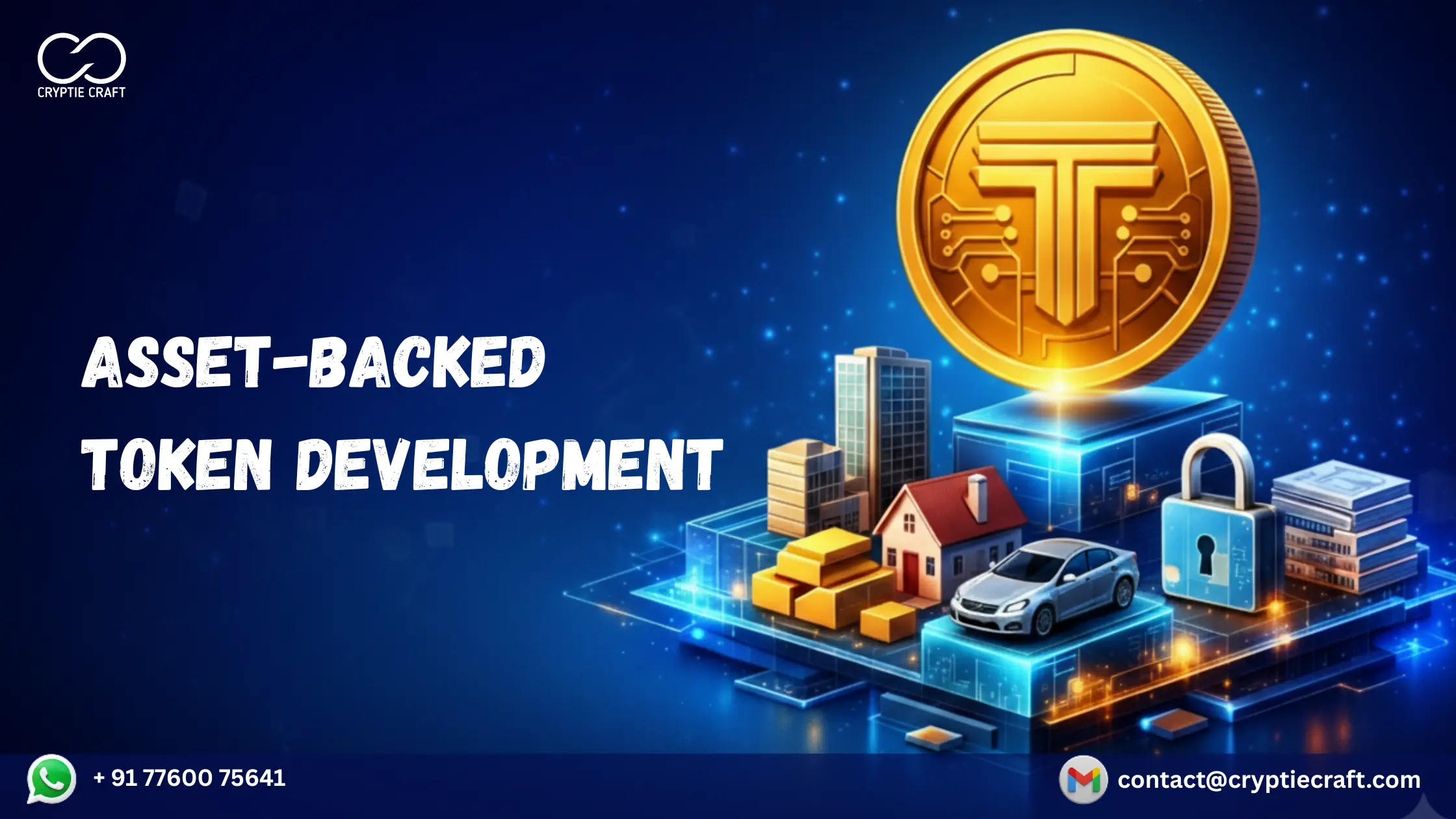
This distinction matters whenever real-world assets are represented on a blockchain. Asset-backed token development involves more than creating digital units linked to property, gold, or financial assets. Each token must have a clearly defined claim, reliable backing, and rules that remain valid beyond its initial issuance.
Building such a token requires careful decisions about smart contract logic, issuance permissions, asset verification, and recordkeeping. The real development challenge is ensuring that blockchain transactions remain consistent with the underlying assets and the rights promised to token holders.
What Are Asset-Backed Tokens?
Asset-backed tokens are blockchain-based digital units linked to identifiable real-world assets or financial claims. Their value or economic rights depend on the underlying backing arrangement, which may involve property, precious metals, commodities, or financial instruments.
Unlike cryptocurrencies that operate without a specific underlying asset, these tokens are issued against an established asset or pool of assets. The issuer defines the relationship through legal agreements, custody arrangements, and documented token terms.
An asset token may represent a share of an asset, a contractual entitlement, or a claim against its issuer. These arrangements determine what the holder can receive and under which conditions.
The blockchain maintains the token’s digital record, while the backing arrangement establishes its economic meaning. Understanding this distinction is essential when evaluating how asset-backed tokens are structured and issued.
Types of Asset-Backed Crypto Tokens
A token linked to stored gold operates differently from one connected to commercial property or a business loan. The underlying asset determines how the token is structured, what information must be recorded, and how it can be used.
The following types of asset-backed crypto tokens serve different financial and commercial purposes.
| Asset Type | Tokenization Model | Real-World Application |
| Real Estate | Tokens linked to property interests or asset-holding entities | Property investment and structured financing |
| Gold and Precious Metals | Tokens backed by specified quantities held in custody | Digital precious-metal ownership or exposure |
| Commodities | Tokens linked to identifiable commodity inventories or claims | Commodity trading and financing |
| Equity | Tokens representing shares or related financial interests | Digital share issuance and transfers |
| Debt Instruments | Tokens representing contractual repayment claims | Loan participation and debt financing |
| Art and Collectibles | Tokens associated with identified high-value assets | Fractional investment or asset financing |
Each asset category requires a suitable token model. Physical inventory, company shares, and debt obligations cannot be managed under identical rules. The asset’s characteristics influence its documentation, valuation, and permitted transactions.
Asset-Backed Security Tokens and Holder Rights
Holding a blockchain token does not automatically give someone legal ownership of the asset behind it. The rights depend on how the token is issued, the legal structure, and the agreements governing the asset.
Asset-backed security tokens may represent equity interests, debt claims, or other regulated financial rights. Depending on the arrangement, holders may receive direct ownership, beneficial interests through an asset-holding entity, or contractual claims against the issuer.
- Ownership Rights: A legally recognized interest in the underlying asset or entity, where the structure permits it.
- Financial Entitlements: Access to dividends, interest, rental income, or other distributions when specified in the offering terms.
- Redemption Rights: The ability to exchange tokens for assets or cash under defined conditions.
- Transfer Rights: Permission to transfer tokens subject to applicable legal and contractual restrictions.
An asset-backed token can also qualify as a security depending on its characteristics and applicable law. Its legal classification determines which issuance, investor eligibility, and transfer requirements may apply.
Asset Backing Verification, Custody and Reserve Reconciliation
A token’s recorded supply is only meaningful when the issuer can demonstrate that sufficient underlying assets support it. Asset backing verification establishes this connection through custody records, independent checks, and regular reconciliation.
Consider a gold-backed token where each unit represents a claim linked to one gram of gold. If 10,000 tokens remain in circulation, the issuer must maintain sufficient eligible gold to support those claims under the agreed backing terms.
- Asset Custody: A custodian holds or safeguards the underlying assets and maintains records of their quantity, identity, and status.
- Reserve Verification: Independent reviews or attestations assess whether reported assets support the outstanding token obligations.
- Supply Reconciliation: The issuer compares eligible reserves against circulating tokens and records any changes caused by additions, withdrawals, or redemptions.
A proof-of-reserves report can provide evidence of backing at a particular point in time. However, it does not independently establish legal ownership, exclude undisclosed liabilities, or guarantee future availability. The SEC investor bulletin explains why proof-of-reserves reports are not equivalent to audited financial statements.
Reliable reserve reconciliation helps issuers identify discrepancies before they affect the claims attached to outstanding tokens.
How Asset-Backed Tokens Are Issued Against Verified Assets
Issuing an asset-backed token requires more than executing a mint transaction. The issuer must confirm that the proposed token quantity is supported by approved assets and that the issuance follows the agreed legal and operational requirements.
The asset-backed token issuance process involves five key steps.
- Match Assets to the Issuance Request: Check the approved custody record and confirm sufficient unallocated backing for the proposed token batch.
- Approve the Token Quantity: Determine how many tokens can be issued based on the verified backing and the rights assigned to each unit.
- Authorize Token Creation: An approved issuer account initiates the minting request within the permitted supply limits.
- Mint and Allocate Tokens: The smart contract creates the approved tokens and transfers them to eligible wallet addresses.
- Update Issuance Records: Record the transaction reference, issued quantity, recipient details, and corresponding asset obligations in the issuer’s records.
The completed transaction establishes the digital token supply. Its connection to the underlying assets remains dependent on accurate supporting records and the issuer’s continuing obligations.
Asset-Backed Token Smart Contract Development
The smart contract determines what can happen to a token after deployment. Its rules must reflect the issuer’s approved supply, transfer conditions, and administrative responsibilities without giving unrestricted control over token holders’ assets.
In asset-backed token smart contract development, the choice of token standard depends on the rights and restrictions attached to the asset. ERC-20 supports standard token balances and transfers, while ERC-3643 provides additional identity and compliance controls for permissioned tokens.
Smart Contract Controls for Asset-Backed Tokens
| Contract Function | Development Requirement |
| Token Minting | Allow authorized accounts to issue tokens within approved limits. |
| Token Burning | Reduce outstanding supply through permitted redemption or cancellation procedures. |
| Transfer Restrictions | Check recipient eligibility before restricted token transfers. |
| Administrative Permissions | Control who can pause transactions or modify sensitive settings. |
How Contract Rules Affect Token Transactions
Consider an asset-backed security token restricted to verified holders. A transfer request reaches the smart contract, which checks the applicable eligibility rules before allowing the transaction. If the recipient does not qualify, the transfer is rejected.
However, the contract cannot independently verify whether the underlying asset remains in custody. That information must come from trusted records and approved integrations.
Contract upgrades also require carefully assigned permissions and documented approval procedures. Unauthorized changes could affect token transfers, supply controls, or holder access.
A well-designed contract makes token operations enforceable on-chain while keeping responsibilities such as asset custody and legal recordkeeping with the appropriate parties.
Asset Token Transfers, Redemption and Payouts
An asset-backed token remains active after issuance. Transfers, income distributions, and redemption requests must follow the rights defined for that token.
Token Transfers
Eligible holders can transfer tokens to approved recipients. Blockchain records confirm the transaction, while any required off-chain ownership records must also be updated.
Income Distributions
A token linked to rental income may entitle holders to periodic payments. The issuer calculates the payable amount, verifies eligible holders, and processes distributions according to the agreed terms.
Asset-Backed Token Redemption
Redemption allows eligible holders to settle their claims through cash payments or asset delivery, depending on the token agreement.
The process follows a defined sequence.
- The holder submits a redemption request.
- The issuer verifies eligibility and the outstanding claim.
- Settlement is completed under the applicable terms.
- Redeemed tokens are burned or retired according to the token model.
Accurate settlement records prevent completed claims from remaining incorrectly represented by circulating tokens.
Asset-Backed Token Development Process
A successful token project begins with clear technical requirements, not blockchain selection. The asset-backed token development process must translate asset records, holder rights, and operational rules into software that can be tested before launch.
Step 1. Assess Asset Eligibility
Review ownership documents, asset valuation, custody arrangements, and legal feasibility. Identify the records and integrations required for tokenization.
Step 2. Define Token Requirements
Specify token supply, holder rights, transfer restrictions, redemption rules, and administrative permissions. Document these requirements before development.
Step 3. Select the Blockchain
Evaluate blockchain security, transaction fees, and compatibility. Choose a suitable token standard, such as ERC-20 or ERC-3643, based on project requirements.
Step 4. Develop the Token Infrastructure
Build smart contracts, administrative interfaces, and backend integrations. Connect token transactions with issuance records and custody systems.
Step 5. Test the Complete System
Test transfers, supply updates, access permissions, and integration failures. Conduct independent smart contract audits where appropriate.
Step 6. Deploy the Token
Deploy verified contracts, configure production permissions, and establish monitoring. Document administrative responsibilities, recovery procedures, and maintenance requirements.
Before launch, verify these three deliverables.
- Tested smart contracts with documented access permissions
- Accurate integration between blockchain transactions and issuer records
- Operational procedures for monitoring, upgrades, and incident handling
These checks help ensure that the completed asset tokenization development project is ready for controlled issuance and ongoing administration.
Asset-Backed Token Security and Compliance
A token contract may work correctly while its supporting asset records or administrative systems remain vulnerable. Asset-backed token security must therefore cover blockchain operations, issuer access, and the records supporting each token.
The following risks require specific testing and controls.
| Potential Risk | Security or Compliance Measure |
| Unauthorized Token Issuance | Compare mint events with approved issuance requests and investigate exceptions. |
| Reserve Record Mismatch | Flag differences between circulating token supply and reconciled asset records. |
| Compromised Administrative Access | Alert on unusual privileged actions and revoke compromised access. |
| Ineligible Token Transfers | Test expired verification records and failures in identity-checking services. |
| Smart Contract Vulnerabilities | Monitor suspicious contract behavior and investigate unexpected execution failures. |
Compliance extends beyond smart contracts. KYC, AML, securities regulations, and investor eligibility requirements depend on the token structure and operating jurisdiction.
Independent reviews can identify weaknesses, but they cannot guarantee complete protection.
Asset-Backed Token Development Cost and Project Scope
The asset-backed token development cost depends on what the token must support beyond basic issuance. A contract with standard minting and burning functions requires less development than one connected to custody records, investor verification, and automated redemption.
Three project requirements have the greatest impact on the budget.
Token Functionality
Custom supply controls, restricted transfers, holder permissions, and distribution mechanisms increase smart contract development and testing requirements.
External Integrations
Connecting custody providers, identity verification services, asset registers, and payment systems adds backend development and operational costs.
Security and Maintenance
Independent contract audits, administrative key protection, deployment, upgrades, and ongoing support must be included when estimating the total investment.
A full RWA tokenization platform adds the cost of investor dashboards, subscription management, asset administration, and reporting systems.
A reliable quotation should separate token development expenses from legal reviews, custody charges, third-party services, and recurring maintenance costs.
Asset-Backed Token Development Services by Cryptiecraft
Cryptiecraft provides asset-backed token development services for businesses issuing tokens linked to real-world assets. Our crypto token development capabilities cover smart contract creation, token issuance controls, transfer restrictions, and integration with supporting systems.
As an asset-backed token development company, we focus on implementing token functionality that matches the asset structure and project requirements. Our services include contract testing, deployment, and ongoing technical support.
Discuss your asset type and token requirements with Cryptiecraft to plan your development project.
Frequently Asked Questions
Q1. Can the underlying asset backing a token be replaced after issuance?
Ans: Yes, if the token terms allow substitutions. The issuer must verify the replacement asset, update custody and reserve records, and preserve the rights promised to token holders.
Q2. Can asset-backed tokens be traded on any crypto exchange?
Ans: Not necessarily. A token can be listed only where trading is legally permitted and the venue supports its restrictions. Buyers and market liquidity must also exist.
Q3. What happens if an asset-backed token holder loses their private key?
Ans: Recovery is possible when the token includes an authorized recovery mechanism. ERC-3643 supports transferring eligible holdings to a verified replacement wallet after identity and ownership checks.
Q4. What happens to asset-backed tokens if the issuer goes bankrupt?
Ans: Recovery depends on the token holder’s legal claim, custody arrangements, and insolvency rules. Bankruptcy may delay access to assets or leave holders with unsecured claims.
Q5. Can the same asset back tokens issued on multiple blockchains?
Ans: Yes, but the issuer must track total outstanding claims across every network. Without coordinated issuance and reconciliation, the same reserves could support more tokens than authorized.
Q6. Why can asset-backed tokens trade below their underlying asset value?
Ans: Market prices depend on available buyers, redemption terms, fees, and confidence in the issuer. Verified asset backing does not guarantee trading at the underlying asset’s value.