Binance Clone Script
  KuCoin Clone Script
  Bybit Clone Script
  Kraken Clone Script
  OKX Clone Script
  ERC-20 Token Development
  TRC-20 Token Development
  BEP-20 Token Development
  Crypto Token Development
  ICO Development
  STO Development
  Binance NFT Clone
  OpenSea Clone Script
  Rarible NFT Clone
  NFT Marketplace Development
  MetaMask Clone Script
  Trust Wallet Clone Script
  Crypto Wallet Development
  DeFi Wallet Development
  Uniswap Clone Script
  PancakeSwap Clone
  SushiSwap Clone
  Crypto Payment Gateway
  Binance Pay Clone
  Crypto MLM Software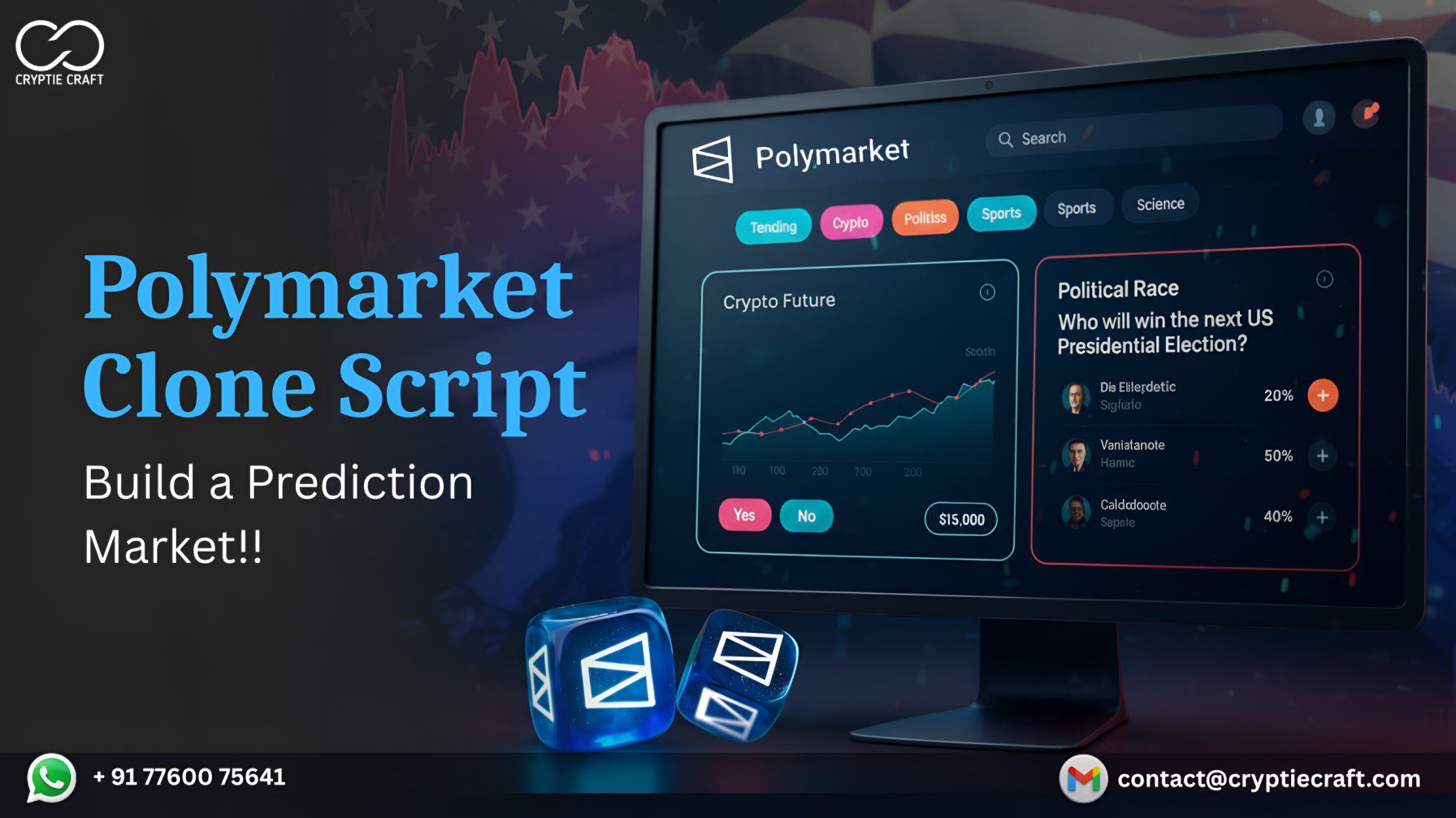
A prediction market can look simple on the surface: an event, a few possible outcomes, a price that moves, and a final result. Building the system behind that experience is a very different task. The platform has to handle constantly changing orders, positions, probabilities, market rules, outcome data, settlement, wallets, and operator decisions while keeping these components connected.
That infrastructure is becoming more important as trading activity expands. According to KuCoin’s latest report, in June 2026, Kalshi, Polymarket, and Polymarket US recorded $44.8 billion in combined monthly volume, up 75% from May, with the FIFA World Cup contributing to the surge.
A Polymarket Clone Script gives businesses a starting point for bringing these moving parts together. The real decisions involve how markets trade, how outcomes are resolved, which blockchain infrastructure is used, how users and transactions are protected, and how the platform generates revenue.
This guide breaks down the features, customization, security, integrations, development process, cost, and monetization behind launching a prediction-market platform.
What is a Polymarket Clone Script?
A Polymarket Clone Script is a ready-made prediction-market software solution that businesses can customize and launch under their own brand. It provides the core infrastructure needed to create event-based markets, enable outcome trading, manage positions, connect wallets, handle settlement, and operate the platform without building every component from scratch.
A Polymarket-style prediction market lets users trade positions based on the expected outcome of real-world events. Markets can cover politics, sports, crypto, finance, technology, entertainment, or custom events. As users buy or sell positions, market prices can change with demand and new information. Once an event is resolved using predefined rules, eligible positions can move through the settlement process.
The business model depends on how the platform is designed and operated. The operator controls market creation, trading rules, supported categories, resolution methods, integrations, and platform management. This means a Polymarket Clone Script does not need to be an exact replica, but it can be adapted around a specific audience, market structure, trading model, and business strategy.
How Does a Polymarket Clone Software Work?
A Polymarket-style platform starts with a question that can be resolved against a clearly defined outcome. The platform operator creates the market, sets the available outcomes, defines the trading period, and specifies how the final result will be determined. Once published, users can take positions based on their expectations.
As trading takes place, market prices change with buying and selling activity. This gives participants a live indication of how the market currently values each possible outcome. Users can monitor their positions, follow market movements, and decide whether to hold or exit before the event reaches its resolution point.
Once the event ends, the platform uses the predefined resolution method to determine the final outcome. Eligible positions are then settled according to the market rules, completing the cycle from market creation to trading, resolution, and redemption.
Prediction Market Lifecycle
Create → Trade → Monitor → Resolve → Redeem
| Stage | What Happens |
| Create | The operator defines the event, outcomes, closing time, and resolution conditions. |
| Trade | Users buy or sell positions based on their expectations. |
| Monitor | Participants track prices, positions, market activity, and event updates. |
| Resolve | The platform determines the final outcome using the defined resolution method. |
| Redeem | Eligible positions are settled according to the market’s final result. |
Core Features of a Polymarket Clone Script
A Polymarket Clone Script should include the essential infrastructure needed to create event markets, facilitate trading, track positions, and complete market settlement without unnecessary complexity.
Prediction Market Creation
Allow operators to create markets with a clear event question, possible outcomes, trading duration, market rules, and predefined resolution conditions.
CLOB Trading Engine
Use a Central Limit Order Book (CLOB) to process and match buy and sell orders based on price and available market liquidity.
Real-Time Order Book
Display live buy and sell orders, current prices, available liquidity, and market depth so users can make informed trading decisions.
Outcome Position Trading
Let users buy or sell positions linked to specific outcomes and manage those positions as market conditions and expectations change.
Market Probability Tracking
Display changing outcome prices as an indication of market-implied probability, supported by live price updates and historical market movements.
Portfolio Management
Provide users with a consolidated view of open positions, balances, transaction history, market exposure, and completed trades.
Automated Settlement
Once an event is resolved, automatically apply the predefined market rules to eligible positions and update the resulting balances.
Wallet Integration
Connect supported crypto wallets so users can fund accounts, manage assets, execute trades, and receive settled positions.
Polymarket Clone Platform Admin Panel Features
The Polymarket Clone admin panel gives platform owners centralized control over users, prediction markets, transactions, and platform activity. It helps administrators monitor trading activity and track key platform metrics from a single dashboard.
User Management
Manage user accounts, profiles, verification status, access permissions, account activity, and participation from a centralized dashboard.
Market Management
Create, edit, publish, pause, or close prediction markets while managing categories, outcomes, trading periods, and market rules.
Resolution Management
Review resolution details, verify outcome information, and manage the defined resolution process when an event reaches its conclusion.
Fee Management
Configure applicable platform fees and monitor fee activity according to the platform’s trading and operating model.
Transaction Monitoring
Track deposits, withdrawals, trades, settlements, and other transactions to maintain financial visibility and identify unusual activity.
Platform Analytics
Monitor trading volume, active users, market activity, transaction trends, and platform performance through centralized analytics.
Polymarket Clone Software Customization Options
A Polymarket Clone Script can be tailored to your business model through brand, market, trading, blockchain, and admin customizations, giving you greater control over how the platform operates.
Brand Customization
Customize the platform’s logo, colors, typography, interface, navigation, and overall user experience to create a distinct brand identity.
Market Customization
Configure prediction market categories, event formats, outcome structures, trading periods, market rules, and resolution conditions based on the platform’s requirements.
Trading Rule Customization
Adapt trading parameters such as supported order types, position rules, trading limits, fees, and other conditions that influence how users participate in markets.
Blockchain Customization
Choose the appropriate blockchain network, supported assets, token standards, and transaction model based on the platform’s technical and business requirements.
Admin Customization
Customize administrative workflows, permissions, dashboards, reporting options, and operational controls to match how the platform will be managed.
Polymarket Clone Script Security Features
Security needs to cover more than user logins in a prediction-market platform. A Polymarket-style prediction market should protect user accounts, wallets, transactions, smart contracts, and administrative access while maintaining clear visibility into important platform activity.
Wallet Protection
Protect connected wallets and digital assets through appropriate custody controls, transaction authorization, access restrictions, and wallet monitoring mechanisms.
User Authentication
Use strong authentication methods, session controls, permission management, and account verification measures to reduce unauthorized account access.
Smart Contract Security
Review smart contract logic for vulnerabilities before deployment and apply appropriate testing, auditing, access controls, and upgrade mechanisms where applicable.
Admin Access Control
Restrict sensitive administrative functions through role-based permissions, privileged access controls, authentication requirements, and activity logging.
Polymarket Clone Platform Integrations
A Polymarket-like platform can connect with external services to extend its core functionality and support the platform’s operational requirements. These connections help the platform work with third-party systems while keeping trading, market operations, and user activities connected.
Blockchain Integration
Connect the platform with the selected blockchain network to handle supported assets, transactions, smart contracts, and market settlement.
Oracle Integration
Connect reliable oracle services to bring verified external event data into the platform for market resolution.
KYC Integration
Integrate KYC and AML services to verify users and support the platform’s applicable compliance and onboarding requirements.
Payment Integration
Connect crypto or supported payment services for deposits, withdrawals, account funding, and transaction processing.
API Integration
Provide APIs for connecting external applications, market data services, analytics tools, trading interfaces, or other business systems with the prediction market platform.
Polymarket Clone Script Development Process
Launching a Polymarket Clone Script involves more than installing ready-made software. The solution needs to be aligned with the business model, configured for the intended prediction markets, connected with required services, tested across critical workflows, and prepared for production deployment.
Requirement Analysis
Define the target audience, market categories, trading model, business rules, blockchain requirements, integrations, and platform objectives.
Script Customization
Adapt the existing Polymarket Clone Software to match the required branding, user experience, market structure, features, and operating rules.
Integration Development
Connect the required blockchain networks, oracle services, wallets, KYC systems, payment services, APIs, and other external components.
Platform Testing
Test trading workflows, order processing, market resolution, settlement, wallet transactions, user accounts, integrations, and administrative functions before launch.
Deployment
Configure the production environment, deploy the platform, complete final checks, and prepare the prediction market platform for live users.
How Much Does a Polymarket Clone Script Cost?
The cost of a Polymarket Clone Script depends on how closely the solution needs to match your intended trading model and how much customization is required. A basic ready-made setup can cost considerably less than a highly customized prediction market platform with advanced trading infrastructure, multiple integrations, mobile applications, and additional development work.
How Does a Polymarket Clone Platform Make Money?
A Polymarket Clone Platform can generate revenue by charging for activities or services connected to trading and platform access. The right monetization model depends on the target market, trading structure, user base, and services offered. A combination of revenue streams can help create a business model that does not rely on a single source of income.
Trading Fees
Charge a fee on eligible trades placed through the platform. Fees can be structured around trading volume, user tiers, or specific market types.
Market Listing Fees
Charge businesses, organizations, or other eligible entities for creating or listing selected prediction markets on the platform.
Withdrawal Fees
Apply a service fee to eligible withdrawals, depending on the asset, network, transaction method, and platform policy.
API Monetization
Offer paid API access to professional users, data providers, analytics platforms, or businesses that need access to platform data or trading functionality.
Why Choose Cryptiecraft for Polymarket Clone Script Development?
Launching a Polymarket Clone Script requires the right combination of prediction-market infrastructure, trading functionality, blockchain integration, customization, and platform controls.
Cryptiecraft can help you build a prediction market platform tailored to your market categories, trading model, branding, user requirements, and business objectives.
From script customization and feature development to blockchain integration, testing, deployment, and ongoing support, Cryptiecraft can handle the technical requirements involved in launching a prediction-market business
Frequently Asked Questions
Q1. What is a Polymarket Clone Script?
Ans: A Polymarket Clone Script is ready-made prediction-market software that businesses can customize, brand, and launch as their own event-trading platform.
Q2. Does a Polymarket Clone Support CLOB Trading?
Ans: Yes. A Polymarket Clone can include a Central Limit Order Book that matches buy and sell orders based on configured trading rules.
Q3. Which Blockchain Can a Polymarket Clone Use?
Ans: A Polymarket Clone can integrate with blockchain networks selected according to supported assets, transaction requirements, smart contracts, and the platform’s operating model.
Q4. Can I Integrate My Own Wallet or Oracle?
Ans: Yes. A Polymarket Clone can integrate supported wallets and oracle services for asset management, external event data, and market resolution.
Q5. How Much Does a Polymarket Clone Script Cost?
Ans: Polymarket Clone Script cost depends on features, trading infrastructure, blockchain, integrations, customization, security requirements, and overall development scope.
Q6. How Long Does It Take to Launch a Polymarket Clone?
Ans: Launch time depends on customization, integrations, testing, blockchain requirements, feature complexity, and whether the solution uses ready-made or custom components.
Q7. Can I Own the Source Code of a Polymarket Clone Script?
Ans: Source-code ownership depends on the provider’s licensing and development agreement, so ownership terms should be confirmed before purchasing the solution.
Q8. How Can I Start a Prediction Market Like Polymarket?
Ans: Start by defining your market model, target users, trading requirements, blockchain, integrations, compliance needs, customization scope, and development budget.