Binance Clone Script
  KuCoin Clone Script
  Bybit Clone Script
  Kraken Clone Script
  OKX Clone Script
  ERC-20 Token Development
  TRC-20 Token Development
  BEP-20 Token Development
  Crypto Token Development
  ICO Development
  STO Development
  Binance NFT Clone
  OpenSea Clone Script
  Rarible NFT Clone
  NFT Marketplace Development
  MetaMask Clone Script
  Trust Wallet Clone Script
  Crypto Wallet Development
  DeFi Wallet Development
  Uniswap Clone Script
  PancakeSwap Clone
  SushiSwap Clone
  Crypto Payment Gateway
  Binance Pay Clone
  Crypto MLM Software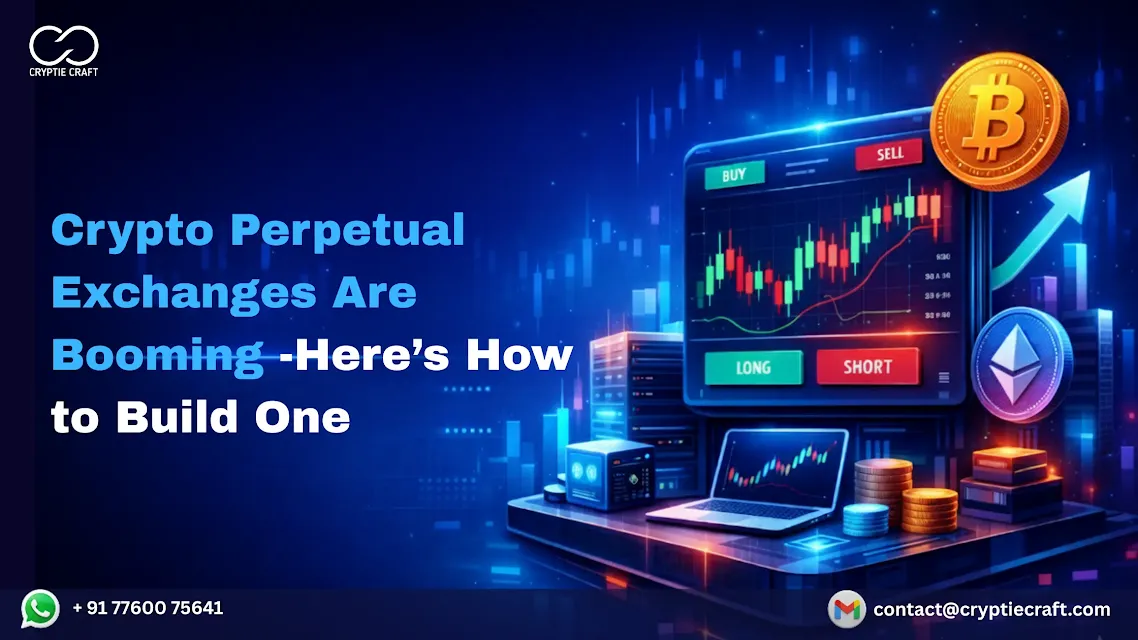
The cryptocurrency market has grown. It now includes more than just spot trading. Today, perpetual contracts account for a major share of global crypto trading activity because they allow traders to use leverage, hedge risk, and profit from both rising and falling markets.
With the growing demand for derivatives trading, businesses are actively building crypto perpetual exchanges to create scalable and competitive trading platforms. From startups and brokerages to fintech companies and institutional firms, organizations are looking for solutions that combine high-speed execution, deep liquidity, advanced risk management, and enterprise-grade security.
To build a successful crypto perpetual exchange, you need more than just a trading interface. It involves a powerful matching engine, liquidity infrastructure, leverage management, funding rate mechanisms, and a secure trading ecosystem.
This guide explores everything businesses need to know about developing a high-performance perpetual trading platform.
What is a Crypto Perpetual Exchange?
A crypto perpetual exchange is a derivatives trading platform that allows users to trade perpetual futures contracts without expiration dates. Unlike spot trading, traders do not own the underlying cryptocurrency. Instead, traders open leveraged positions to benefit from price movements.
Perpetual contracts stay open as long as traders maintain the required margin level. To keep perpetual contract prices aligned with the spot market, exchanges implement a funding rate system that balances long and short positions at regular intervals.
Perpetual contracts have become one of the most traded products in the cryptocurrency market, driven by their flexibility, leverage capabilities, and deep liquidity. As a result, crypto perpetual exchange development has emerged as a growing opportunity for businesses looking to launch advanced derivatives trading platforms.
Why Businesses Are Investing in Crypto Perpetual Exchange Platforms
Perpetual trading is one of the fastest-growing areas of the crypto market. Traders prefer perpetual contracts because they offer leverage, flexible positions, and access to both rising and falling markets.
As demand grows, more businesses are investing in crypto perpetual exchange development. Many startups, brokerages, and fintech companies consider perpetual trading a high-potential growth segment.
Growth Potential of Crypto Derivatives Markets
Crypto derivatives represent a substantial portion of worldwide trading activity. Traders use perpetual contracts to hedge risk, increase capital efficiency, and apply advanced trading strategies.
The market continues to attract both retail and institutional participants. This trend is increasing demand for modern perpetual futures exchange platforms with strong performance and deep liquidity.
Market Demand Across Key Regions
Demand for crypto perpetual exchanges is growing across global markets.
The USA is seeing stronger institutional adoption. The UAE continues to attract crypto businesses and investment. Europe is moving toward clearer regulations. Asia-Pacific remains a major center for crypto trading and liquidity.
These trends create new opportunities for businesses launching centralized and decentralized perpetual exchanges.
Competitive Advantages of Owning a Perpetual Trading Exchange
Owning a perpetual exchange gives businesses more control over their trading ecosystem. Benefits include:
- Strong brand positioning
- Ownership of trading liquidity
- Access to user insights
- Greater product flexibility
- Long-term growth potential
For many organizations, crypto perpetual exchange development services provide a practical path to entering the global derivatives market.
Crypto Perpetual Exchange Development Services We Offer
Every business enters the market with different goals. Some need a fully customized trading platform. Others want a faster launch with lower development costs. We deliver flexible development solutions for crypto perpetual exchanges, helping startups, brokerages, fintech companies, and institutional firms meet their trading platform goals.
Custom Crypto Perpetual Exchange Development
Custom development is the best option for businesses that need complete control over their trading platform. Every component is built around specific business requirements, from the matching engine and risk management system to liquidity infrastructure and user experience.
This approach provides:
- Full platform ownership
- Advanced customization
- Better scalability
- Greater product flexibility
Custom solutions are ideal for businesses planning long-term growth in the crypto derivatives market.
White-Label Crypto Perpetual Exchange Solutions
A white-label crypto perpetual exchange helps businesses launch faster using pre-built trading infrastructure. This model reduces development time while providing essential trading, liquidity, and security features.
Key advantages include:
- Faster deployment
- Lower initial investment
- Proven trading framework
- Reduced technical complexity
It is a practical choice for startups looking to enter the market quickly.
Hybrid Perpetual Exchange Development
Hybrid platforms combine the performance of centralized exchanges with the transparency of decentralized trading systems. This model is gaining attention as decentralized perpetual exchanges continue to grow across the Web3 ecosystem.
A hybrid architecture can offer:
- Flexible platform design
- Improved asset control
- Enhanced transparency
- Future-ready scalability
Whether you need a custom platform, a white-label solution, or a hybrid trading ecosystem, choosing the right development model is essential for building a competitive crypto perpetual exchange.
| Development Model | Best For | Launch Time | Customization |
| White-Label | Startups | Fast | Medium |
| Custom Development | Enterprises | Longer | High |
| Hybrid Model | Web3 Platforms | Medium | High |
Core Architecture of a Crypto Perpetual Exchange System
A crypto perpetual exchange relies on multiple backend systems to deliver fast trade execution, accurate risk management, and secure asset handling. These core components work together to ensure platform stability, scalability, and a seamless trading experience for users.
High-Speed Matching Engine
The matching engine is the backbone of a crypto perpetual exchange. It processes incoming orders, updates the order book, and executes trades in real time while maintaining speed and accuracy.
- Ultra-Low Latency Execution: Low-latency execution enables trades to be processed within milliseconds. Faster execution improves trading efficiency, reduces slippage, and helps traders capitalize on market opportunities during periods of high volatility.
- Order Book Processing: The order book records all active buy and sell orders on the platform. Efficient order book processing ensures accurate price discovery, smooth trade matching, and real-time market updates across trading pairs.
Risk Management Engine
A risk management engine protects both traders and the exchange from excessive financial exposure. It continuously evaluates positions, leverage levels, and market conditions to maintain platform stability.
- Margin Calculations: Margin calculation systems evaluate the required collateral to open and maintain leveraged positions. This reduces the risk of overexposure while ensuring responsible and controlled leveraged trading.
- Liquidation Monitoring: The system continuously tracks account health and position performance. When margin levels fall below required thresholds, liquidation mechanisms help reduce potential losses and maintain market integrity.
- Exposure Management: Exposure management controls overall platform risk by monitoring trader positions, leverage utilization, and market concentration. This helps prevent systemic risks during periods of extreme price movement.
Wallet and Custody Infrastructure
Wallet and custody infrastructure is responsible for safeguarding digital assets while supporting deposits, withdrawals, and trading operations. Strong custody systems play a critical role in building user trust and platform security.
- Asset Storage Architecture: A secure asset storage framework separates operational funds from long-term reserves. This approach improves fund protection while ensuring efficient transaction processing.
- Hot and Cold Wallet Management: Hot wallets support daily transactions and liquidity requirements, while cold wallets store the majority of assets offline. Combining both methods helps balance accessibility and security.
- Fund Protection Systems: Advanced security measures such as multi-signature authorization, encryption protocols, withdrawal controls, and continuous monitoring help protect user assets from unauthorized access and cyber threats.
Liquidity Engine & Market Making Infrastructure
Deep liquidity is one of the most important factors behind the success of a crypto perpetual exchange. Strong liquidity ensures faster trade execution, reduced price impact, tighter spreads, and a better trading experience for both retail and institutional traders.
Liquidity Management System
A liquidity management system helps maintain healthy trading activity across perpetual markets. It ensures sufficient buy and sell orders are available at different price levels, reducing market inefficiencies and improving execution quality.
- Order Book Depth Management: Order book depth reflects the volume of buy and sell orders available in the market. A deeper order book improves market stability and allows traders to execute larger positions without significantly affecting asset prices.
- Slippage Reduction Mechanisms: Slippage occurs when a trade executes at a different price than expected. Advanced liquidity engines minimize slippage through efficient order routing, balanced liquidity distribution, and continuous market monitoring.
Market Maker Integration
Market makers play a vital role in maintaining active and liquid perpetual markets. Their participation helps create a consistent flow of buy and sell orders, improving market efficiency and trading confidence.
- External Liquidity Providers: External liquidity providers contribute additional market depth by supplying large volumes of tradable assets. This helps exchanges support higher trading activity and maintain competitive pricing.
- Market-Making Partnerships: Strategic partnerships with professional market-making firms improve liquidity coverage across trading pairs. These partnerships help ensure stable spreads, stronger order books, and smoother trade execution during volatile market conditions.
Cross-Exchange Liquidity Aggregation
Liquidity aggregation allows perpetual exchanges to access liquidity from multiple sources instead of relying on a single provider. This approach improves market depth and enhances execution quality.
- Multi-Source Liquidity Routing: Smart routing systems analyze available liquidity across connected exchanges and providers. Orders are automatically directed to the most favorable liquidity source to achieve better execution outcomes.
- Liquidity Optimization: Liquidity optimization balances trading activity across multiple markets and liquidity pools. This helps maintain consistent execution quality while reducing liquidity fragmentation.
Spread Optimization and Order Book Depth
Efficient spread management directly impacts trading costs and overall market competitiveness. Exchanges with tighter spreads typically attract more active traders and higher trading volumes.
- Bid-Ask Spread Management: The bid-ask spread represents the difference between the highest buying price and the lowest selling price. Effective spread management improves price discovery and reduces trading costs for users.
- Trading Efficiency Enhancement: Combining strong liquidity, optimized spreads, and deep order books creates a more efficient trading environment. This results in faster execution speeds, lower market impact, and improved trading performance.
Key Features of Our Crypto Perpetual Exchange Solution
Modern perpetual traders expect more than basic trading functionality. A successful crypto perpetual exchange must provide advanced trading tools, flexible leverage options, real-time analytics, and seamless integration capabilities to support diverse trading strategies.
Advanced Trading Engine
The trading engine serves as the foundation of the platform by enabling accurate order execution and supporting multiple trading strategies. It is designed to handle high trading volumes while maintaining speed and reliability.
- Market Orders: Market orders execute immediately at the best available price. They are commonly used when execution speed is more important than price precision.
- Limit Orders: Limit orders allow traders to specify their preferred execution price. Orders remain open until market conditions meet the defined price level.
- Stop-Loss Orders: Stop-loss orders automatically close positions when a predefined price is reached. This helps traders manage risk and limit potential losses during market volatility.
- Take-Profit Orders: Take-profit orders automatically secure gains when a target price is achieved. They help traders execute disciplined exit strategies without constant market monitoring.
Leverage and Margin Trading System
Leverage is a defining feature of perpetual futures trading. A robust margin system enables traders to manage positions efficiently while maintaining proper risk controls.
- Cross Margin: Cross margin utilizes the entire account balance as collateral for open positions. This approach helps reduce liquidation risk by sharing available margin across trades.
- Isolated Margin: Isolated margin assigns collateral to individual positions. Traders gain greater control over risk exposure because losses are limited to the margin allocated to a specific trade.
- Adjustable Leverage: Adjustable leverage allows users to customize risk and capital efficiency based on their trading strategy. Different leverage levels can be configured according to asset volatility and market conditions.
Real-Time Trading Dashboard
A comprehensive trading dashboard gives users instant access to market data, trading tools, and portfolio information. Real-time visibility is essential for informed decision-making.
- TradingView Charts: TradingView integration provides advanced charting capabilities, multiple timeframes, and professional-grade visualization tools used by traders worldwide.
- Technical Indicators: Built-in indicators such as RSI, MACD, Bollinger Bands, and Moving Averages help traders analyze trends, identify opportunities, and improve trading decisions.
- Portfolio Analytics: Portfolio analytics provide insights into account performance, open positions, profit and loss, margin utilization, and overall trading activity.
API and Algorithmic Trading Support
Many professional traders rely on automation to execute strategies at scale. API infrastructure enables seamless integration with external trading systems and third-party applications.
- Trading APIs: Trading APIs allow developers and institutions to connect directly with the exchange for order placement, account management, and real-time market data access.
- Automated Trading Bots: Automated trading bots execute predefined strategies without manual intervention. They help traders respond to market opportunities more efficiently and consistently.
- High-Frequency Trading Compatibility: Optimized infrastructure supports high-frequency trading environments where speed, reliability, and low latency are critical for strategy execution and market participation.
How Crypto Perpetual Exchanges Work
Crypto perpetual exchanges run on a structured system that combines trading execution, pricing mechanisms, and risk control to support leveraged trading without expiry. Every trade flows through multiple layers that ensure speed, accuracy, and platform stability.
Order Placement and Matching Engine Execution
When a user places a buy or sell order, it is sent to the matching engine where it is validated and matched with the best available opposite orders in the order book. The system executes trades in real time with low latency to ensure accurate pricing and smooth performance even during high market volatility.
Margin Validation and Leverage Approval
Before opening a position, the platform checks whether the trader has enough collateral for the selected leverage. The risk engine evaluates margin levels, exposure, and account health to ensure the position meets platform risk rules.
Funding Rate Calculation System
Perpetual contracts use a funding mechanism to keep prices aligned with the spot market. Funding rates are calculated using mark price and index price differences, and payments are exchanged between long and short traders at regular intervals to maintain price balance.
Liquidation Execution Process
If a trader’s margin falls below the maintenance level, the system automatically triggers liquidation to close the position and limit losses. Insurance funds and risk control systems help absorb extreme market movements and maintain overall platform stability.
Cost of Crypto Perpetual Exchange Development
The cost of building a crypto perpetual exchange depends on the type of solution, feature complexity, and scalability requirements. Options like MVP, white-label, hybrid, and custom development differ in speed, flexibility, and overall investment.
MVP Crypto Perpetual Exchange
An MVP is a basic version built to validate the idea with essential trading features such as simple order matching, wallet integration, and admin controls, starting from $50,000 to $200,000
White-Label Crypto Perpetual Exchange
A white-label solution is a ready-made platform that can be branded and launched quickly with a core trading engine, standard UI, wallet support, and leverage features starting from $25,000 to $150,000
Custom Crypto Perpetual Exchange
A custom exchange is built from scratch with an advanced trading engine, risk management system, liquidation logic, and high scalability for enterprise use, starting from $150,000 to $1,000,000 plus
Hybrid Crypto Perpetual Exchange
A hybrid model combines a pre-built foundation with custom modules to balance speed and flexibility while adding enhanced trading and liquidity features, starting from $80,000 to $350,000
Revenue Model of Crypto Perpetual Exchanges
A well-designed crypto perpetual exchange can generate revenue from multiple sources beyond standard trading commissions. Diversified revenue streams improve platform sustainability and long-term profitability.
Trading Fees (Maker-Taker Model)
Trading fees remain the primary revenue source for most perpetual exchanges. Platforms typically charge different fees for market makers and takers, encouraging liquidity while maintaining consistent trading activity.
Funding Rate Earnings
Perpetual contracts use funding rates to keep contract prices aligned with spot market prices. Exchanges may earn revenue through funding-related mechanisms depending on platform design.
Institutional Liquidity Partnerships
Partnerships with market makers, liquidity providers, and institutional trading firms can generate additional revenue while improving market depth and execution quality.
API and Market Data Monetization
Premium APIs, historical market data, advanced analytics, and enterprise-grade trading infrastructure can create recurring revenue opportunities for professional traders and institutions.
Our Crypto Perpetual Exchange Development Process
A structured development process ensures faster deployment, improved security, and a scalable trading infrastructure capable of handling growing trading volumes.
- Requirement Analysis and Product Strategy: We define business goals, target markets, trading models, leverage requirements, compliance needs, and liquidity strategies before development begins.
- UI/UX Design for Perpetual Trading Platforms: Our team creates intuitive trading interfaces focused on execution speed, usability, and professional trading workflows.
- Core Platform Development and Integration: We build and integrate matching engines, risk management systems, liquidity modules, wallet infrastructure, APIs, and trading dashboards.
- Security Testing and Quality Assurance: Every component undergoes penetration testing, performance testing, and security validation before launch.
- Deployment, Optimization, and Scaling: After deployment, we continuously optimize infrastructure, improve performance, and support platform growth.
Technology Stack for Crypto Perpetual Exchange Development
The technology stack directly impacts exchange performance, scalability, security, and reliability. Modern perpetual exchanges require enterprise-grade infrastructure capable of processing large trading volumes with minimal latency.
| Layer | Technologies |
| Backend Development | Go, Rust, Node.js |
| Real-Time Data Streaming | Kafka, Redis Streams, WebSockets |
| Database Systems | PostgreSQL, ClickHouse, MongoDB |
| Cloud Infrastructure | AWS, Google Cloud, Kubernetes |
| Blockchain Integration | Ethereum, BNB Chain, Arbitrum, Solana |
| Monitoring & Security | Prometheus, Grafana, Cloudflare |
Security & Compliance for Crypto Perpetual Trading Platforms
Security and compliance are critical components of long-term exchange success. Strong controls help protect user assets, build trust, and support regulatory readiness.
KYC and AML Integration Systems
Know Your Customer (KYC) and Anti-Money Laundering (AML) systems help verify user identities, monitor suspicious activity, and support regulatory compliance across multiple jurisdictions.
Security Audits and Penetration Testing
Regular audits and penetration testing identify vulnerabilities before they can be exploited. Continuous security assessments strengthen platform resilience and reduce operational risk.
Global Compliance Frameworks
Regulatory requirements vary across the United States, the European Union, the UAE, and Asia-Pacific markets. Exchanges must evaluate licensing, reporting, and compliance obligations before launching operations.
Performance Benchmarks for Crypto Perpetual Exchanges
Performance directly influences user experience, platform reliability, and institutional adoption. High-performance infrastructure is essential for competing in the global derivatives market.
Matching Engine Latency Benchmarks
Institutional-grade exchanges target sub-millisecond execution speeds to support efficient order processing and high-frequency trading strategies.
High-Throughput Trading Capacity (TPS Scaling)
Scalable infrastructure must handle large volumes of simultaneous orders without performance degradation during periods of market volatility.
99.99% Uptime Architecture
High availability minimizes downtime and ensures uninterrupted access to trading services. Redundant systems and failover mechanisms help maintain operational continuity.
Load Balancing and Failover Systems
Traffic distribution and automated failover processes improve reliability by preventing system bottlenecks and reducing the impact of infrastructure failures.
Use Cases of Crypto Perpetual Exchange Platforms
Perpetual trading infrastructure serves a wide range of organizations operating within the digital asset ecosystem.
Crypto Trading Startups
Startups can launch branded perpetual exchanges to capture trading volume, build communities, and create new revenue streams within growing derivatives markets.
Institutional Trading Firms
Institutions require advanced risk controls, deep liquidity, and high-performance execution systems capable of supporting large-scale trading operations.
Brokerage and Fintech Companies
Brokerages and fintech providers can expand service offerings by integrating perpetual trading products into their existing ecosystems.
Proprietary Trading Firms
Prop trading firms benefit from direct market access, algorithmic trading support, and infrastructure optimized for high-frequency trading strategies.
Challenges in Crypto Perpetual Exchange Development
Launching a perpetual exchange involves technical, operational, and regulatory challenges that must be addressed during planning and development.
Liquidity Bootstrapping Challenges
Attracting sufficient liquidity is one of the most significant challenges for new exchanges. Without deep order books, traders may experience higher spreads and execution issues.
High-Frequency Trading Scalability Issues
Supporting large trading volumes requires optimized infrastructure, efficient matching engines, and scalable backend systems capable of handling real-time market activity.
Regulatory Uncertainty and Compliance Management
Crypto regulations continue to evolve globally. Exchanges must remain adaptable to changing compliance requirements while maintaining operational efficiency.
Why Choose Cryptiecraft as Your Crypto Perpetual Exchange Development Company?
Cryptiecraft delivers end-to-end crypto exchange development services designed for startups, fintech companies, brokerages, and institutional businesses. Our solutions combine high-performance matching engines, advanced risk management systems, enterprise-grade security, and scalable cloud infrastructure to support long-term growth.
From custom perpetual exchange development to white-label deployment and hybrid architectures, our team focuses on building secure, liquidity-ready, and future-proof trading platforms that meet the demands of modern derivatives markets.
Frequently Asked Questions
Q1. What is a crypto perpetual exchange?
Ans: A crypto perpetual exchange is a trading platform where users trade perpetual futures contracts with leverage and no expiry date, allowing them to speculate on price movements without owning the underlying asset.
Q2. How do perpetual futures exchanges make money?
Ans: Perpetual exchanges make money through trading fees on every order, along with funding rate payments, liquidation charges, and additional platform service fees.
Q3. How much does it cost to build a crypto perpetual trading platform?
Ans: The cost of building a crypto perpetual trading platform ranges from $25,000 to $1,000,000+, depending on whether it is white-label, MVP, hybrid, or fully custom with advanced trading infrastructure.
Q4. How long does it take to develop a crypto perpetual exchange?
Ans: Development time can range from 2 weeks for a white-label solution to 12–18 months for a fully custom exchange depending on complexity, features, and scalability requirements.
Q5. What is the difference between a spot exchange and a perpetual exchange?
Ans: A spot exchange enables direct buying and selling of crypto assets with immediate ownership transfer, while a perpetual exchange allows leveraged trading of derivatives without owning the asset or any contract expiry.
Q6. Is it legal to launch a crypto perpetual exchange globally?
Ans: Legality depends on jurisdiction, as some countries allow crypto derivatives trading under licensing frameworks while others restrict or heavily regulate leveraged trading platforms.
Q7. What is a matching engine in a crypto perpetual exchange?
Ans: A matching engine is the core system that processes and matches buy and sell orders in real time based on price and time priority to ensure fast, accurate, and fair trade execution.
Q8. How does liquidation work in perpetual trading platforms?
Ans: Liquidation happens when a trader’s margin falls below the maintenance level, triggering an automatic closure of positions by the system to prevent further losses and maintain platform stability.
Q9. What is a funding rate in crypto perpetual contracts?
Ans: A funding rate is a periodic payment exchanged between long and short traders to keep contract prices aligned with the spot market by balancing demand between both sides.
Q10. What is white-label crypto perpetual exchange development?
Ans: White-label crypto perpetual exchange development provides a ready-made trading platform that can be branded and launched quickly, reducing development time and cost while offering standard trading features.
Q11. Can I build a crypto perpetual exchange without liquidity?
Ans: A crypto perpetual exchange can be built without liquidity, but it will not function effectively since low liquidity leads to poor price execution, high spreads, and weak trading experience.
Q12. How do crypto perpetual exchanges acquire liquidity?
Ans: Crypto perpetual exchanges acquire liquidity through market makers, institutional liquidity providers, and API integrations while also using incentives and reward programs to attract trading volume.
Q13. What are the risks of running a crypto perpetual exchange?
Ans: Running a crypto perpetual exchange involves risks such as security breaches, liquidity shortages, regulatory challenges, system downtime, and exposure to extreme market volatility if risk controls are weak.
Q14. How do market makers work in perpetual futures exchanges?
Ans: Market makers provide continuous buy and sell orders in the order book to ensure liquidity, tighter spreads, and stable price discovery for smooth trading execution across the platform.