Binance Clone Script
  KuCoin Clone Script
  Bybit Clone Script
  Kraken Clone Script
  OKX Clone Script
  ERC-20 Token Development
  TRC-20 Token Development
  BEP-20 Token Development
  Crypto Token Development
  ICO Development
  STO Development
  Binance NFT Clone
  OpenSea Clone Script
  Rarible NFT Clone
  NFT Marketplace Development
  MetaMask Clone Script
  Trust Wallet Clone Script
  Crypto Wallet Development
  DeFi Wallet Development
  Uniswap Clone Script
  PancakeSwap Clone
  SushiSwap Clone
  Crypto Payment Gateway
  Binance Pay Clone
  Crypto MLM Software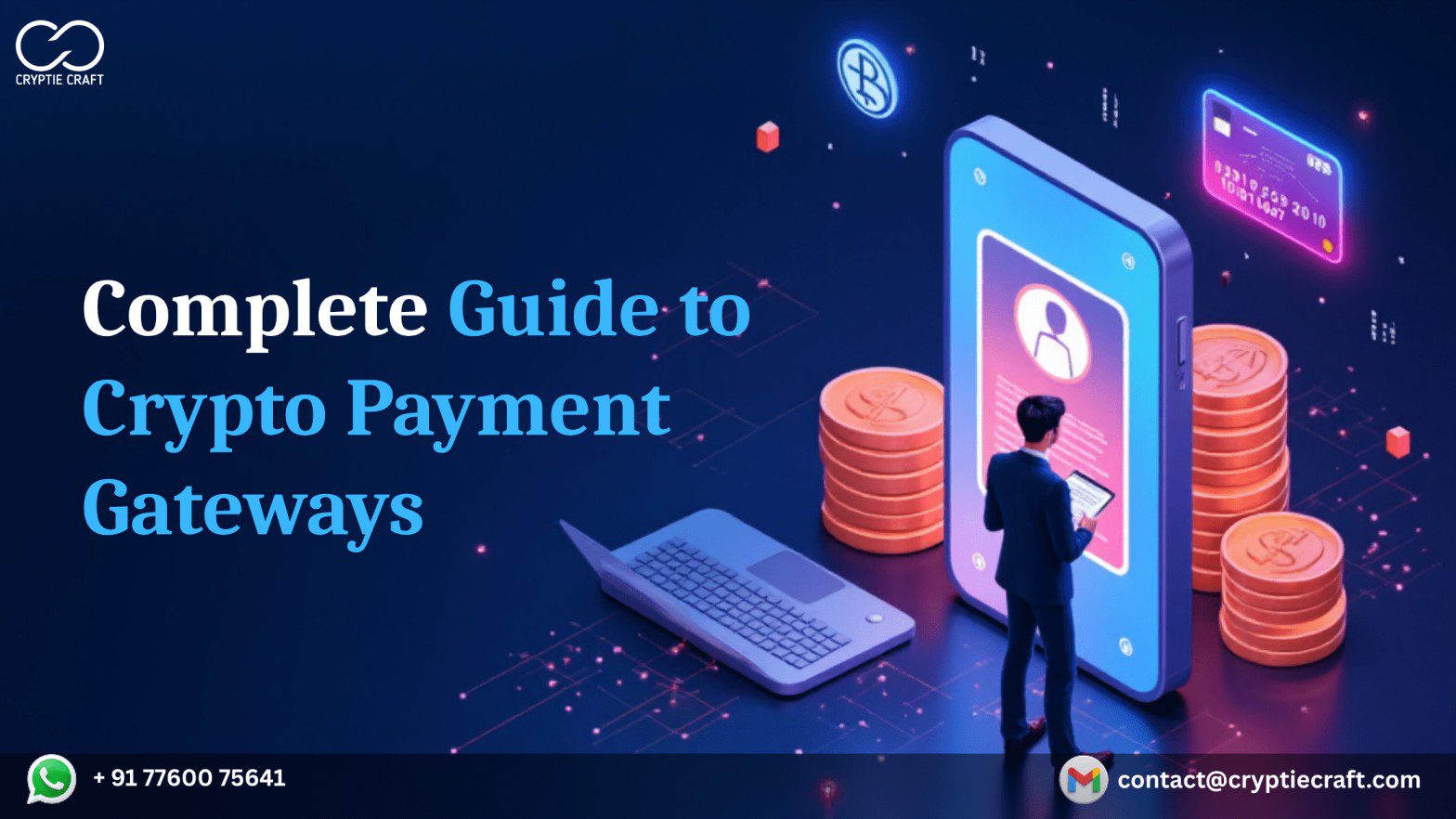
The crypto payment market is growing faster than ever. Worldwide crypto transaction volumes recently reached over $33 trillion, largely driven by stablecoin payments and derivatives trading. In 2026, you will see the greatest demand for Blockchain-based payment gateway solutions. In fact, startups are looking for a fast, secure and borderless payment system.
The rise of Web3 payment solutions and stablecoin payment processing is reshaping how money moves. Whether you are planning to build from scratch, launch with a white-label, or scale an existing system, this guide covers what you need to know.
What is Crypto Payment Gateway Development?
Crypto payment gateway development is the process of designing and building a software solution that enables businesses to accept payments in cryptocurrencies such as Bitcoin, Ethereum, and stablecoins. It acts as a bridge between merchants, customers, and blockchain networks, allowing a trouble-free exchange of the crypto funds.
Hence, a crypto payment gateway is software that works with Blockchain technology to make sure the transactions are valid and transparent. It also has the ability to swap cryptocurrencies to traditional currencies if necessary. Practically, businesses implement the software to offer their customers a really globalized way of making payments that is not only super-fast but also affordable. Because of this, decentralized payment system is becoming very common these days.
Best Blockchain in Payment Gateway Processing
Each blockchain varies in performance, cost efficiency, and transaction speed, making it important to choose the right network based on specific payment gateway requirements.
Ethereum for Smart Contract Payments
Ethereum enables smart contract–based payment systems that automate and secure transactions without the need for intermediaries. These smart contracts execute predefined conditions on the blockchain, making payments transparent, programmable, and trustless.
Because of its strong developer ecosystem and widespread adoption, Ethereum is widely used for building decentralized payment solutions, including automated settlements, subscription billing, and escrow-based transactions.
BNB Chain for Faster Transactions
Binance Smart Chain’s payment processing is extremely fast and at the same time cost-effective. In fact, BNB Chain can efficiently process thousands of transactions per second. It is a great fit for crypto merchant payment systems that demand faster transaction confirmation times.
Solana for High-Speed Payment Processing
With the ability to process almost 65,000 transactions per second, Solana stands out in crypto transaction processing. Besides providing ultra-low fees, it also enables users to have settlements in near-real time. Solana is the best digital asset payment processing platform whose daily transactions are in the millions.
Polygon for Low-Cost Crypto Transactions
The very low fees on the Polygon payment system give merchants the possibility of making microtransactions at an affordable rate, really. It effectively acts as an Ethereum layer-2 scaling solution. Building a crypto payment gateway for e-commerce might be great with polygon, as startups can keep a close eye on the operational costs.
TRON for Stablecoin Payments
TRON has been the leading blockchain for stablecoin transfers, mainly for USDT, on payment platforms worldwide. TRON brings extremely fast block confirmations and almost zero fees. If one were to rank stablecoin payment systems by ability to handle high-frequency transactions, TRON would be at the top.
Therefore, each Blockchain serves a unique payment need clearly. Match your business goals to the right network for the best crypto payment gateway development results.
How a Cryptocurrency Payment Gateway Works
A crypto payment gateway processes digital payments instantly. It connects buyers, merchants, and the blockchain network in one flow. Understanding how this flow works makes it easier for startups to adopt crypto payments with confidence.
Payment Request Initiation
After selecting their product, a buyer opts for crypto payment during checkout. The crypto payment gateway software very quickly takes instructions of the order and the amount payable in the form of crypto.
Wallet Address Generation
Further, a different wallet address is assigned by the blockchain payment API for each transaction. This is quite effective in matching and securing every crypto checkout system payment individually.
Blockchain Transaction Verification
After the customer dispatches the crypto to the given wallet address, nodes on the blockchain will be responsible for verifying the transaction by crypto transaction verification on decentralized payment infrastructure.
Payment Confirmation Processing
The receipt of payment is automatically confirmed by the smart contract-based payment system after the transaction has been verified. Real-time crypto invoice payment notifications are sent to the merchant and customer.
Crypto-to-Fiat Conversion
Digital assets are exchanged at live market rates by crypto-to-fiat payment systems. Besides, stablecoin payment processing is on the stage of this conversion, which helps the reduction of volatility risks.
Merchant Settlement Processing
The merchant’s bank or digital wallet receives the money from the merchant settlement process. In this way, a crypto merchant payment system is finalized swiftly and safely.
You can develop a crypto payment gateway with a trusted Blockchain Development Company that is really quick, safe, and clear. It also offers the means for global crypto payment solutions suitable for every modern business.
Types of Crypto Payment Gateway Solutions
Crypto payment gateways have several types. Each type suits different business needs and goals. Choosing the correct one helps your business grow. Let us understand some of the major crypto gateway types.
Hosted Crypto Payment Gateways
This type of gateway system is hosted and managed by a third party entirely. Usually, this is very simply implemented with absolutely no server maintenance required. This setup is quite handy for the small businesses, which are inclined to start crypto payments today.
Self-Hosted Cryptocurrency Payment Systems
When you choose this crypto payment software, you get to have total control over it. This means you can have all your data at hand and custom branding. This option is mostly chosen by the businesses that value control and data protection very much.
Decentralized Crypto Payment Gateways
The operation of these gateways goes on directly on the blockchain without any central authority figure involved. Each transaction is handled by smart contracts in an automatic and secure way. Such a solution works well for Web3 payment gateway development projects.
White-Label Crypto Payment Gateway Solutions
This is a ready-made gateway that, after being fully rebranded, you can offer as your own product. With this, you will be able to save a lot of development time and also reduce the overall launch costs drastically. A great choice for startups that are fast launching a crypto payment gateway business.
Custodial Crypto Payment Gateways
In a custodial gateway, the provider keeps and handles your crypto assets on your behalf. Also, it comes with easy recovery mechanisms whenever you lose a connection with your account. This is aligned to beginners who want to have simple crypto merchant payment systems.
Non-Custodial Crypto Payment Gateways
Here, you are the one who holds and controls your private keys and, of course, funds always. No third party can ever freeze or even have access to your digital assets. The most suitable for a secure blockchain payment gateway development with the highest level of privacy.
These types of gateways are created to manage various business purposes and needs. Choose the one that best stands up to your security, budget, and control goals.
Build vs Buy vs White-Label Crypto Payment Gateway Development
You have to decide how to deploy transaction infrastructure that shapes your financial commitment, security, compliance alignment, and speed to market. So, you can choose which type of crypto payment gateway development you want.
| Metric | Build From Scratch | Buy (Third-Party API) | White-Label Solution |
| Development Cost | Very High ($200k+) | Low (Pay per use) | Moderate ($15k – $30k) |
| Time to Market | 12 to 24 Months | 1 to 2 Weeks | 4 to 8 Weeks |
| Customization Level | Absolute Freedom | Extremely limited | High Brand Control |
| Compliance Load | Full Burden (MiCA/PCI) | Handled by Provider | Inherited Frameworks |
| Revenue Control | 100% Margin Retention | Zero processing fees | Custom free markup |
Building from scratch gives you complete control, but it is rarely the right call for a startup. A white-label payment gateway development offers the best balance, which is fast deployment, room to customize, and low capital risk.
Benefits of Cryptocurrency Payment Gateway Development for Businesses
Businesses that accept cryptocurrencies have a great opportunity and will stand out from their competitors. They not only reduce their expenses but also enhance their security. Every company can benefit from the integration of crypto payments.
Faster Cross-Border Transactions
Cryptocurrency payments settle in minutes, not days, and with no third party slowing things down. Your customers can pay from anywhere in the world and get instant confirmation. This kind of speed is something traditional international wire transfers cannot match.
Lower Payment Processing Costs
Crypto gateway fees are way lower than credit card processing fees. On every single transaction, you save up some money doing it through the blockchain. Transferring stablecoins on Polygon and Tron is among the lowest-fee services.
Enhanced Payment Security
Every transaction on a blockchain is recorded in an immutable ledger that nobody can quietly edit later. Smart contracts then handle the payment logic on their own without human approval, and no chance of internal tampering.
Global Customer Reach
A cryptocurrency payment system is a channel that customers from any country can use with no restrictions. Payment can be received from the holders of Bitcoin, Ethereum, or stablecoins globally. No bank account or local currency is ever required.
24/7 Transaction Availability
Cryptocurrency payment gateways operate all the time, every day of the year. Consumers can make payments at midnight, weekends, or public holidays without any issues at all. Revenue will not be lost just because the business has been down.
Therefore, when you develop a crypto payment gateway, it optimizes your operational cash flow and build strong user trust. With a future-proof framework that outpaces rigid, traditional financial competitors.
Key Features of a Modern Crypto Payment Gateway
Any modern crypto payment platform needs advanced features to perform well. These key features keep your Blockchain payment system fast, secure, and reliable. Every feature is important for your business growth.
Multi-Cryptocurrency Support
Your payment system can handle Bitcoin, Ethereum, Solana, BNB, and the main stablecoins simultaneously.
Secure Wallet Integration
When you include this feature with the crypto wallet API, your platform connects to electronic wallets seamlessly and securely.
Real-Time Transaction Tracking
Each crypto payment gets its verification and confirmation live on the blockchain immediately using the real-time transaction tracking feature.
Automated Crypto-to-Fiat Conversion
This feature lets the merchants automatically convert the received cryptocurrency into the stable local fiat currency.
Merchant Dashboard Analytics
The control panel will monitor your earnings, the number of transactions, and customers’ payment history at any time.
Recurring Subscription Billing
Smart contracts built through smart contract development services handle monthly or yearly subscription charges automatically without card-on-file, no failed payments, and no manual renewals from the customer.
QR Code Crypto Checkout
Customers scan a single QR code to pay from any wallet app. This removes the need to copy-paste long wallet addresses and makes in-store and mobile payments much faster.
Automated Refund Processing
Refunds are routed back to the original wallet address through a smart contract, with no manual reconciliation. Merchants set the refund rules once and the system handles the rest.
The above-mentioned features make it business-ready along with a user-friendly design. You can either build or integrate them to stay ahead of every competitor in your market.
Security Measures in Cryptocurrency Payment Gateway Development
First and foremost, security is the backbone of every crypto payment gateway. Implementing these five layers will secure each transaction, wallet, and user data against any kind of threats.
End-to-End Encryption
The payment information remains encrypted during the whole transmission from the sender to the receiver. There is no interruption or decryption in between.
Multi-Signature Wallet Security
Funds do not leave the wallet until multiple authorized key holders give their consent to the transaction.
Two-Factor Authentication
This is apart from the standard login credentials and withdrawal permissions; a verification code sent to the user is required as the second factor to gain access to the account and withdraw the funds.
Cold Wallet Storage
Most of the cryptocurrencies/funds are kept in the cold wallets, which are offline, preventing the hackers from gaining the unauthorized access and hacking them.
Smart Contract Auditing
You can run a code through the rigorous auditing process; the vulnerabilities of any given smart contract are identified and rectified before it is deployed on the blockchain.
Having robust security makes your cryptocurrency gateway app very trusted and reliable for all types of businesses. Never deploy without establishing all the necessary key security layers.
Advanced Features of Modern Crypto Payment Gateway Solutions
When including advanced features while building a crypto payment gateway, it offers more user-friendly functionalities. These help protect against the most modern digital fraud methods. These add-on options drastically change simple platforms into top-class checkout environments.
Cross-Chain Payment Processing
The users are free to pay with any cryptocurrency, whereas you will get the asset you prefer even if it is on another network.
Stablecoin Payment Integration
Having a stablecoin-only payment processor is like a shield against the wild price changes that come with using crypto in your everyday business.
AI-Powered Fraud Detection
Smart and effective machine learning algorithms detect wallet hacking attempts and prevent the execution of such malicious operations.
Layer-2 Scaling Support
The payment gateway by default supports polygon payments and globally instant Solana transactions, given the crypto context.
Recurring Crypto Payments
Contractual arrangements are so well automated that if subscription payments are due, the customer does not even have to approve it manually every month.
By opting for these top-tier modules, any enterprise or company gains significant advantages over their competitors. This type of functional design is also a perfect guarantee that your processing of crypto assets will be stable, quick, and scalable entirely.
Cost to Develop a Crypto Payment Gateway
Understanding your total crypto payment gateway development cost breakdown helps you balance initial setup capital. Your chosen deployment method directly dictates budget requirements, software complexity, and ultimate time-to-market speed.
| Development Approach | Initial Cost Estimate | Average Timeline | Best Suited For |
| White-Label Solution | $20,000 – $70,000 | 4 to 8 Weeks | Startups seeking fast, branded entry |
| Custom MVP Build | $40,000 – $80,000 | 3 to 5 Months | Niched platforms testing core features |
| Enterprise-Grade | $150,000 – $300,000+ | 6 to 12 Months | High-volume fintech firms demanding absolute control |
In the end, one has to evaluate the cost to develop a crypto payment gateway and understand the maintenance cost to remain profitable. Choosing a custom framework helps your business secure a dominant market position.
Regulatory Compliance in Crypto Payment Gateway Development
One has to follow the global compliance rules, which can tremendously reduce legal risks, allow you to keep your business licenses, and make your institutional partners more confident in you. Adding layers of thorough regulatory checks from the very beginning is the best way to protect your company’s longevity.
KYC Compliance Requirements
The onboarding is prevented by automated identity verification tech that gathers and authenticates the users’ government-issued docs with a high degree of accuracy.
AML Regulatory Standards
Continuous monitoring of transactions using AI enables the analysis of the flow of assets on the blockchain to identify and immediately stop illegal operations like money laundering.
GDPR Data Protection Compliance
It protects the sensitive client records on decentralized personal identity architectures is one of the methods by which businesses can comply with hefty global privacy standards.
Global Cryptocurrency Regulations
The processing engine keeps up with changes in regulations on a global scale and even thoroughly implements the European MiCA regulation without any complications.
If you integrate automated legal protections into your system of handling transactions, it scales your business globally without any friction. Making compliance is an important part of your strategy; in fact, it can keep your business safe from being exposed to serious regulatory crackdowns and substantial operational financial penalties.
Revenue Models of Crypto Payment Gateway Development Solutions
Diversifying monetization schemes not only maximizes platform cash flow but also promotes enterprise profitability and guarantees steady long-term business revenue growth.
Transaction Fee Revenue
The platform charges a fractional percentage from each blockchain-enabled transaction carried out via your merchant network.
Merchant Subscription Plans
Companies are charged predictable monthly or annual fees as they use premium digital asset checkout features.
Currency Conversion Fees
You impose a reasonable markup when exchanging fluctuating cryptocurrencies for stable local fiat currency payouts.
API Monetization
Developers acquire periodic licenses to harmoniously connect your protected crypto wallet integration API with their storefronts.
Enterprise Licensing Models
Established enterprises make one-time payments to use your white-label crypto payment gateway business guide software.
The combination of these different income streams creates a highly profitable and secure digital asset settlement platform.
Challenges in Crypto Payment Gateway Development
Dealing with these essential technical and structural difficulties is very important if you want to keep transactional stability, user faith, and continue running the business long-term.
Cryptocurrency Price Volatility
Price changes of assets in a very short time can bring great change in the transaction values while the verification window of the checkout is still open.
Regulatory Uncertainty
Changing legal regulatory requirements in different parts of the world make it hard for the platforms that are running the transactions to keep going without facing legal risks.
Blockchain Scalability Issues
Congestion in the network can bring problems like slow transaction confirmation time and high cost of gas on the main layers.
Security Threats
There are regular attempts by hackers to take advantage of vulnerabilities in hot wallet architectures and theft of sensitive user transaction data.
Integration Complexity
Mapping and integrating old banking systems with decentralized networks is such a complex work that it needs specially tailored smart contract alignment processes.
So, one has to meet these challenges with a strong technical solution, come up with regulatory plans, and have the best architecture to support very large usage.
Real-World Use Cases of Crypto Payment Gateway Development
Global e-commerce brands, subscription services, and travel portals all deploy custom Web3 payment gateway solutions to get into the booming market. This advanced decentralized payment eliminates middlemen delays and ensures instant merchant settlements.
E-Commerce Cryptocurrency Payments
Online stores plug a crypto gateway into their checkout to accept Bitcoin, stablecoins, and other tokens alongside cards. The result is lower processing fees, fewer chargebacks, and a wider customer base — especially in regions where card penetration is low.
SaaS Subscription Billing Platforms
SaaS businesses use recurring smart contracts to auto-charge user wallets every billing cycle. There are no failed card transactions, no manual renewals, and customers anywhere in the world can subscribe without a bank.
NFT Marketplace Transactions
NFT marketplaces rely on crypto payment gateways to handle mint fees, secondary sales royalties, and creator payouts. Settlement is instant and on-chain, which keeps the entire transaction history transparent for both buyer and seller.
Gaming Platform Payments
Gaming platforms use crypto gateways for in-game purchases, tournament prize payouts, and player-to-player asset trading. Microtransactions on Polygon or Solana cost a fraction of card fees, which makes small purchases finally viable.
Travel Booking Payment Systems
Travel platforms accept crypto to serve international customers who would otherwise face currency conversion fees and slow bank transfers. A traveller in Brazil can book a hotel in Bali in stablecoins and the operator gets paid within minutes.
Cross-Border Remittance Solutions
Remittance services route payments through stablecoins instead of correspondent banks. Workers send money home in minutes for a fraction of the traditional 6-7% Western Union-style fee which is one of the largest practical use cases for crypto payments today.
B2B Merchant Payment Platforms
B2B platforms use crypto gateways to settle large invoices between suppliers and buyers across borders. Stablecoin settlement removes FX risk and shortens days-of-receivables from weeks to hours.
Web3 Marketplace Transactions
Web3 marketplaces for digital goods, services, or data that handle payments natively on-chain. Buyers connect their wallets, transactions clear without an intermediary, and the marketplace takes a small protocol fee.
Decentralized Finance Applications
DeFi protocols integrate crypto payment rails for deposits, withdrawals, lending, and yield payouts. Smart contracts replace the entire traditional banking back office, settling activity in real time on the chain.
Cryptocurrency Crowdfunding Platforms
Crowdfunding platforms accept global crypto contributions for new ventures, NGOs, or creator projects. Funds reach the recipient instantly without bank gatekeeping, and the entire raise is auditable on-chain.
Thus, integrating a custom-built enterprise crypto gateway offers rapid business expansion. This allows instant, frictionless verification of transactions.
Technology Stack Used in Professional Crypto Payment Gateway Development
Choose a robust tech stack that guarantees ultra-secure digital asset payment processing with instant global network synchronizations.
- Blockchain Networks: Ethereum, BNB Chain, Polygon, Solana, Tron, Bitcoin Lightning Network
- Smart Contract Development: Solidity, Rust, Vyper, Hardhat, Truffle, OpenZeppelin
- Backend Development: Node.js, Go, Python, Java, NestJS
- Wallet Integration: Web3.js, Ethers.js, WalletConnect, MetaMask SDK, Coinbase Commerce API
- Databases: PostgreSQL, MongoDB, Redis, IPFS
- Security Tools: AES-256 Encryption, TLS 1.3, Multi-Signature Wallets, HSM, Cloudflare WAF
- Cloud & DevOps: AWS, Google Cloud, Microsoft Azure, Docker, Kubernetes, CI/CD (GitHub Actions, Jenkins)
- Monitoring & Analytics: Prometheus, Grafana, ELK Stack, Chainalysis
- Fiat Integration: Stripe API, PayPal API, Plaid, SWIFT, Visa Direct
Choosing optimized frameworks provides an institutional-grade, highly reliable framework capable of handling millions of global transactions seamlessly.
Step-by-Step Crypto Payment Gateway Development Process
This successful development process is capable of manifesting complex blockchain networks into scalable commercial payment solutions. It eliminates deployment risks effectively and brings your platform to a level that is suitable for institutional-grade transaction processing by staying on a geared technical map.
Business Requirement Analysis
You should distinctly delineate who your prime markets are, which digital assets you will be backing, fee models, and which local regulatory compliance structures to comply with.
Blockchain Network Selection
It is preferable to opt for the top networks like Solana or Polygon to be sure of extremely fast transaction speeds and very low processing costs.
Payment Gateway Architecture Design
Design very well-secured and scalable system structures that will be able to collect incoming merchant requests and perform instant order matching.
Wallet API Integration
Connect dependable multi-signature crypto wallet APIs with a cryptocurrency wallet development, which will enable you to have automated transaction creation, tracking, and secure settlement.
Security Testing Implementation
They will carry out the most comprehensive of smart contract audits and penetration testing to remove any points of vulnerability before releasing the software publicly.
Deployment & Maintenance Support
Initiate the product live onto production servers while at the same time giving continuous monitoring to identify and troubleshoot any unforeseen runtime issues.
The implementation of each stage in an orderly manner will ensure that your digital asset settlement system is not only high-performing and secure in every way but also legally compliant.
Why Choose Cryptiecraft as Your Cryptocurrency Payment Gateway Development Company?
Choosing the right crypto payment gateway development company is key to your future market success. Cryptiecraft creates custom, high-performance, and very secure financial infrastructure that perfectly matches your business goals. Our developers build production-ready merchant portals with multi-signature wallet protection, automated currency conversion, and fast transaction settlement. We bridge traditional payment methods and decentralized networks, so your platform handles both without friction. If you work with Cryptiecraft, you will get a scalable system, strong compliance systems, and regular technical support, which will help your business stay at the top in the global Web3 ecosystem.
Frequently Asked Questions
Q1. How does a cryptocurrency payment gateway process transactions in real time?
Ans: The cryptocurrency payment gateway usually makes a unique address, keeps watching on-chain wallet activity, and then fires an immediate confirmation action that notifies merchants.
Q2. What is the difference between custodial and non-custodial crypto payment gateways?
Ans: Custodial setups handle and protect your private keys end to end, so you don’t directly manage them day to day. Non-custodial options instead keep user ownership upfront; assets are controlled by the users themselves, not by the service.
Q3. How much does it cost to develop a crypto payment gateway in 2026?
Ans: For the cost of a basic white-label approach, expect around $20,000 to $70,000. If it’s a custom enterprise platform, budgets often start near $150,000 and can climb to $300,000+ depending on features.
Q4. Which blockchain is best for building a crypto payment gateway?
Ans: The best blockchains are always Solana and Polygon, which are frequently chosen. They’re known for low transaction fees, plus quick sub-second confirmation patterns that keep payments feeling instant.
Q5. How do crypto payment gateways convert cryptocurrency into fiat currency?
Ans: They typically send the incoming funds to connected liquidity providers, lock the exchange rate for consistency, and then run automated fiat payouts to bank accounts.
Q6. How long does it take to build a crypto payment gateway from scratch?
Ans: The time taken from initial design through development, security review, and deployment, an institutional-grade crypto gateway commonly takes six to twelve months, assuming nothing unexpected breaks along the way.
Q7. Can crypto payment gateways support multiple cryptocurrencies and stablecoins?
Ans: Yes, it can support multi-currency infrastructure and has no problem integrating popular networks like Ethereum, Solana, and Bitcoin together with the main dollar-pegged stablecoins.
Q8. How do crypto payment gateways handle cross-border payments?
Ans: They handle cross-border payments through several intermediaries and legacy bank rails; they simply channel the payments directly via the worldwide blockchain networks, resulting in borderless settlements within minutes.
Q9. What is the architecture of a crypto payment gateway system?
Ans: The architecture is combining merchant-facing APIs and secure wallet nodes; it features a high-speed transaction monitoring engine and automated ledger settlement.
Q10. How secure are cryptocurrency payment gateways against hacking and fraud?
Ans: It includes multi-signature cold storage and end-to-end data encryption. They employ AI-powered automated on-chain risk monitoring models with which to control the assets.