Binance Clone Script
  KuCoin Clone Script
  Bybit Clone Script
  Kraken Clone Script
  OKX Clone Script
  ERC-20 Token Development
  TRC-20 Token Development
  BEP-20 Token Development
  Crypto Token Development
  ICO Development
  STO Development
  Binance NFT Clone
  OpenSea Clone Script
  Rarible NFT Clone
  NFT Marketplace Development
  MetaMask Clone Script
  Trust Wallet Clone Script
  Crypto Wallet Development
  DeFi Wallet Development
  Uniswap Clone Script
  PancakeSwap Clone
  SushiSwap Clone
  Crypto Payment Gateway
  Binance Pay Clone
  Crypto MLM Software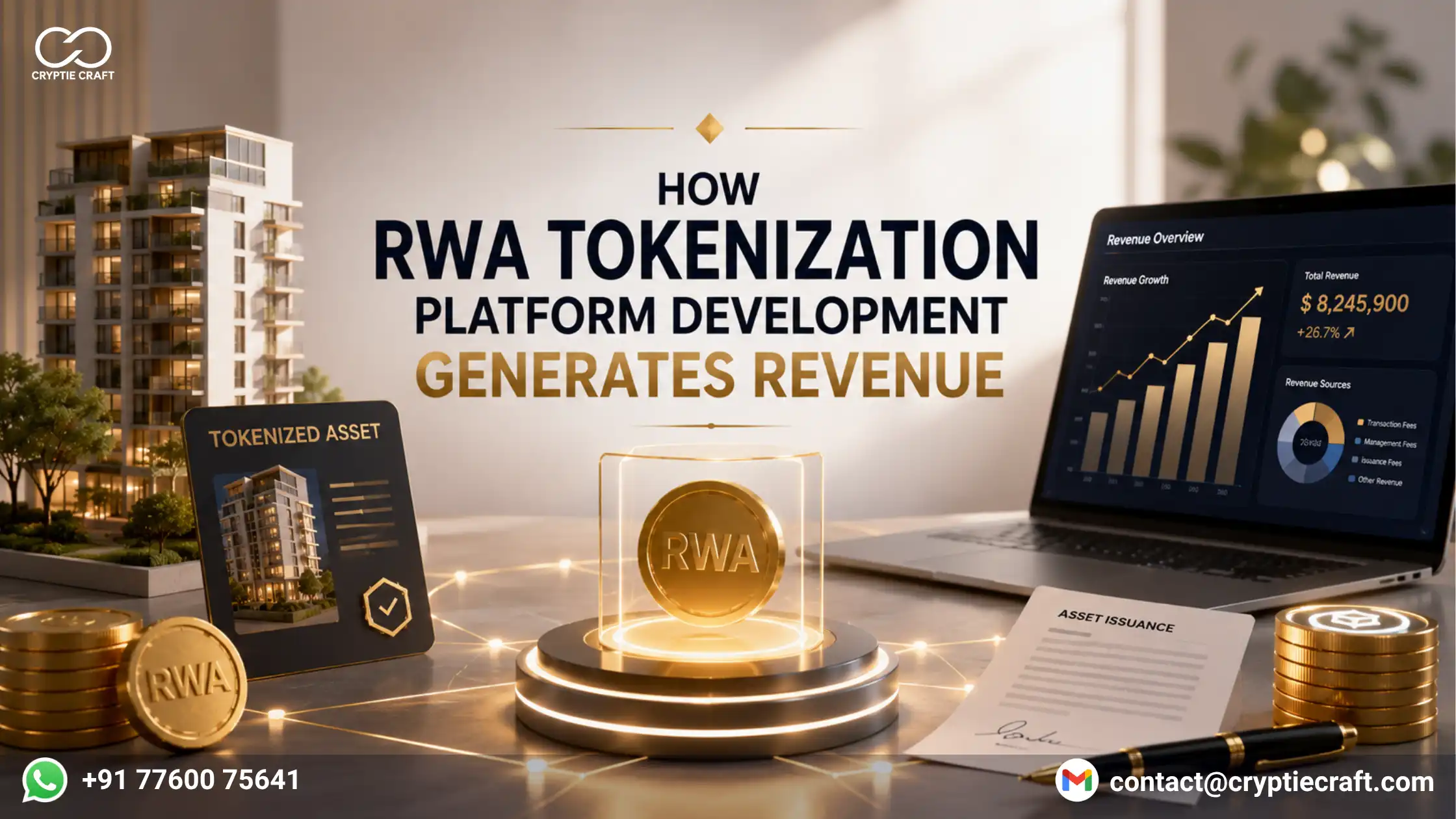
An RWA tokenization platform can generate revenue across the entire lifecycle of tokenized real-world assets, from asset onboarding and token issuance to investor transactions, asset servicing, secondary-market trading, and redemption. Depending on the platform’s business model, additional revenue can come from subscriptions, AUM-based services, APIs, data, licensing, and institutional infrastructure.
But there is an important distinction between platform revenue and asset returns. Rental income from tokenized real estate, interest from private credit, or other returns generated by an underlying asset belong to the asset and its investors. The platform earns by providing the infrastructure and services that enable tokenization, issuance, management, trading, settlement, and administration.
So, which revenue models make the most sense for an RWA platform? It depends on the asset class, target customers, transaction activity, recurring services, and overall platform strategy. This guide explores the major RWA tokenization platform revenue models, where revenue can be captured across the asset lifecycle, how pricing can be structured, and how to build a sustainable monetization strategy.
How Does an RWA Tokenization Platform Make Money?
An RWA tokenization platform can monetize different participants for different services rather than depending on a single fee. The main revenue sources typically come from asset issuers, investors and traders, and institutional or enterprise clients. The right mix depends on the platform’s asset classes, services, user base, and operating model.
Revenue From Asset Issuers
Asset owners, fund managers, property businesses, and other issuers can pay for bringing eligible assets onto the platform. Revenue may be generated during onboarding, tokenization, listing, issuance, and related administration services.
Revenue From Investors and Traders
Investor-side revenue is generally linked to platform activity. Depending on the platform structure, this can include purchase, trading, settlement, transfer, withdrawal, or redemption-related fees.
Revenue From Institutions and Enterprises
Institutional clients can create higher-value B2B revenue through platform subscriptions, API access, analytics, reporting, white-label infrastructure, and asset administration services.
| Revenue Payer | What They Pay For | Potential Revenue Model |
| Asset Issuers | Asset onboarding, tokenization, listing, issuance | Setup or issuance fees |
| Investors & Traders | Buying, selling, transfers, settlement | Transaction-based fees |
| Institutions & Enterprises | APIs, infrastructure, analytics, administration | Subscription or licensing |
Where Can a Platform Monetize the RWA Asset Lifecycle?
An RWA tokenization platform can capture revenue at different stages of an asset’s journey, rather than earning only when a token is created. The main monetization points run from asset onboarding and tokenization to issuance, servicing, trading, and redemption.
Onboarding → Tokenization → Issuance → Servicing → Distribution → Trading → Redemption
Asset Onboarding and Tokenization
Before investors can access a tokenized real-world asset, the platform must prepare and configure it for issuance. Asset onboarding fees, tokenization charges, listing fees, and smart-contract deployment fees can create revenue at this stage.
Primary Issuance and Distribution
Once the asset is ready, the platform can monetize its entry into the market through RWA issuance fees, placement charges, subscription fees, or transaction-based pricing. Revenue here is tied to bringing newly tokenized assets to investors.
Asset Servicing and Income Distribution
An active RWA may require ongoing administration, reporting, investor records, and income processing. These services can create recurring RWA platform revenue, particularly for assets with continuing cash flows such as rental property or private credit.
Secondary Trading and Settlement
After primary issuance, investor activity can create additional RWA trading revenue. Platforms supporting secondary markets may charge for trades, transfers, and settlement, although actual revenue depends on market participation and trading demand.
Redemption and Asset Closure
When investors exit, or the tokenized asset reaches the end of its lifecycle, the platform can monetize redemption, settlement, transfer, and closure services.
Which RWA Revenue Models Create Recurring Income?
For an RWA tokenization business model, the difference between earning once and earning repeatedly is commercially important. One-time revenue can support asset launches, while recurring models can continue generating income after the initial tokenization process is complete.
One-Time Revenue Models
Tokenization fees, initial onboarding, listing, smart-contract deployment, and initial issuance are generally tied to launching an asset. They can generate immediate revenue but require a steady pipeline of new tokenized assets to maintain growth.
Recurring Revenue Models
Recurring RWA revenue streams can come from AUM-based fees, asset servicing, subscriptions, API access, data services, and platform licensing. These models can continue while the asset, investor relationship, or enterprise agreement remains active.
| Revenue Type | Examples | Revenue Pattern | Main Advantage |
| One-Time | Onboarding, tokenization, initial setup | Per asset or launch | Immediate revenue |
| Transactional | Trading, settlement, transfers | Based on activity | Scales with usage |
| Recurring | AUM, servicing, subscriptions | Monthly, quarterly, or annual | More predictable income |
| Enterprise | Licensing, APIs, infrastructure | Contract-based | Higher-value B2B relationships |
Why Recurring Revenue Matters for RWA Platforms
Depending entirely on new token issuance can make platform revenue heavily dependent on acquiring new assets and issuers. A stronger RWA platform monetization strategy can combine launch-based income with recurring services, creating revenue opportunities throughout the customer and asset relationship.
Which RWA Revenue Model Fits Each Asset Class?
There is no single RWA tokenization revenue model that works equally well across every asset. The way a platform monetizes tokenized real estate can differ significantly from private credit, Treasuries, commodities, or tokenized funds because each asset has different cash flows, servicing requirements, investor behavior, and holding periods.
Real Estate
For real estate tokenization, revenue opportunities can extend beyond initial issuance. Platforms may combine tokenization and listing charges with property administration, AUM-based services, rental-income distribution, secondary trading, and redemption.
The recurring nature of property administration can make real estate suitable for a mix of upfront and ongoing revenue.
Private Credit and Debt
Private credit tokenization can support revenue around origination, issuance, servicing, administration, and payment processing. Since credit assets involve ongoing principal and interest payments, servicing infrastructure can become an important part of the commercial model.
Treasuries and Fixed-Income Assets
For tokenized Treasuries and fixed-income assets, transaction-based revenue can be combined with asset servicing, portfolio services, subscriptions, or institutional access. The opportunity is often closely connected to repeat investor and institutional activity.
Gold and Commodities
Gold tokenization and commodity-backed assets can create monetization opportunities through issuance, trading, custody-related services, and redemption. The platform’s revenue structure should reflect the operational requirements involved in representing and settling the underlying assets.
Funds and Alternative RWAs
Tokenized funds, infrastructure, carbon assets, royalties, and intellectual property can use different combinations of management, administration, licensing, distribution, and transaction fees. The most suitable model depends on how the underlying asset is structured and how investors access it.
| RWA Asset Class | Strong Revenue Opportunities | Revenue Character |
| Real Estate | Tokenization, AUM, administration, income distribution, trading | Upfront + recurring |
| Private Credit & Debt | Origination, servicing, administration, payment processing | Transactional + recurring |
| Treasuries & Fixed Income | Trading, subscriptions, portfolio services, asset servicing | Recurring + transactional |
| Gold & Commodities | Issuance, trading, custody-related services, redemption | Transactional |
| Funds & Alternative RWAs | Management, administration, licensing, distribution | Recurring + enterprise |
How Do Primary and Secondary RWA Markets Generate Revenue?
The primary market and secondary market create two different commercial opportunities for an RWA tokenization platform.
In the primary market, the platform monetizes the creation and initial distribution of tokenized assets. In the secondary market, revenue comes from ongoing investor activity after issuance.
Primary Market Revenue
Primary-market monetization is closely connected to launching a new asset. Potential revenue points include:
- Issuance and placement fees
- Investor subscription charges
- Listing fees
- Initial transaction fees
The challenge is that this revenue generally depends on a continuous supply of new assets entering the platform.
Secondary Market Revenue
A secondary marketplace can create repeat RWA trading revenue whenever investors buy, sell, transfer, or settle tokenized positions. This can potentially create a more activity-driven revenue stream because the same asset can generate multiple transactions after its initial issuance.
Research from the Bank for International Settlements on tokenized real estate markets also examines trading activity and liquidity in tokenized real-world asset markets, reinforcing the importance of a functioning secondary market.
Tokenization alone does not guarantee liquidity. Trading demand, market participation, transferability, and secondary-market infrastructure all influence whether ongoing activity can support transaction-based revenue.
Primary vs Secondary: The Business Difference
| Primary Market | Secondary Market | |
| Main activity | New asset issuance | Existing asset trading |
| Revenue trigger | Asset launch | Investor activity |
| Revenue pattern | Mostly launch-based | Potentially recurring |
| Key dependency | New asset supply | Trading demand and liquidity |
Does Tokenization Automatically Create Liquidity?
No. Tokenizing an asset does not guarantee an active secondary market. Liquidity depends on factors such as investor demand, market participation, transferability, accessibility, pricing, and supporting marketplace infrastructure.
This distinction matters when designing an RWA tokenization platform business model. A platform should not build its revenue projections around secondary-market trading unless there is a credible strategy for attracting participants and supporting market activity.
How Can RWA Platforms Monetize Institutional Demand?
Institutional clients can create a different revenue opportunity for an RWA tokenization platform because they may need more than access to tokenized assets. Asset managers, financial institutions, fintech companies, and other enterprises may pay for the infrastructure, data, APIs, and operational capabilities required to run RWA activities at scale.
Instead of charging only per transaction, platforms can build B2B and enterprise revenue around long-term usage.
RWA Tokenization as a Service
Businesses that do not want to build tokenization infrastructure internally can pay for access to a ready-made platform. Revenue can be structured through setup charges, recurring subscriptions, usage-based pricing, or enterprise contracts.
This model is particularly relevant when the client wants to tokenize multiple assets rather than launch a single project.
White-Label RWA Platforms
A white-label RWA platform allows an enterprise to offer tokenization or digital-asset investment services under its own brand while using underlying platform infrastructure.
Potential monetization can include:
- Platform licensing
- Implementation fees
- Recurring infrastructure charges
- Customization fees
- Support and maintenance
Institutional APIs, Data, and Analytics
API-driven services can turn platform capabilities into recurring revenue products. Institutions may require access to:
Asset data → Portfolio data → Transaction APIs → Reporting → Analytics
Rather than treating data and APIs as secondary features, an RWA business can package them as subscription or enterprise services.
Compliance and Asset Administration
Institutional RWA operations can also require ongoing administrative capabilities such as investor verification, reporting, transfer controls, and lifecycle management.
Where the platform provides these capabilities directly, they can become part of a broader institutional RWA revenue model.
Which Institutional Model Fits Best?
| Client Need | Suitable Monetization |
| Launch a tokenization business | Platform-as-a-Service |
| Operate under its own brand | White-label licensing |
| Connect existing systems | API subscription |
| Need asset intelligence | Data and analytics |
| Require ongoing operations | Administration services |
The strongest opportunity is often to move from selling individual platform functions to building long-term enterprise relationships. That can make institutional revenue less dependent on day-to-day retail trading volume.
How Should You Price an RWA Tokenization Platform?
There is no single pricing formula for an RWA tokenization platform. Pricing should reflect what is being delivered, who is using the platform, how frequently they use it, and whether the service creates value once or continuously.
A practical approach is to choose between percentage-based, fixed, and hybrid pricing.
Percentage-Based Pricing
A percentage model links the platform’s fee to an economic value such as:
- Asset value
- Transaction value
- Assets under management (AUM)
- Trading volume
This can align platform revenue with customer activity, but income may fluctuate when asset values or transaction volumes change.
Fixed and Per-Asset Pricing
Fixed pricing works well when the service has a clearly defined scope.
For example, a platform could establish separate charges for asset onboarding, tokenization, listing, initial issuance, or enterprise implementation, making RWA tokenization platform development costs easier to understand before a project begins.
Hybrid Pricing
For many RWA tokenization business models, combining pricing methods can provide greater flexibility:
Setup Fee + Transaction Fee + Recurring Fee
For example, an issuer could pay an initial tokenization or implementation charge, while the platform earns additional revenue from ongoing servicing or transaction activity.
Which Pricing Model Should You Choose?
| Business Requirement | Suitable Approach |
| Single asset launch | Fixed / per-asset |
| High transaction activity | Percentage-based |
| Ongoing asset management | Recurring / AUM-based |
| Enterprise platform | Licensing/subscription |
| Multiple revenue sources | Hybrid |
The key is to price according to value delivered rather than simply adding fees to every platform action. Excessive charges can discourage issuers, investors, and trading activity, ultimately reducing the platform’s revenue opportunity.
What Makes an RWA Platform Revenue Model Sustainable?
Generating revenue from an RWA platform is one challenge; building a model that can continue as the platform grows is another. A sustainable RWA tokenization business model should balance revenue diversity, customer adoption, asset activity, and the cost of delivering ongoing services.
Diversifying Revenue Without Overcomplicating Fees
A platform does not need dozens of charges to create multiple revenue streams. A smaller combination of issuance, transaction, recurring service, and enterprise revenue can be easier for customers to understand and easier to manage operationally.
The goal is to avoid dependence on a single source while keeping the pricing structure transparent.
Balancing Platform Revenue With User Adoption
There is a direct commercial relationship between pricing and platform activity:
Reasonable Fees → More Participation → Greater Activity → Stronger Revenue Opportunity
If fees become excessive, issuers may look for alternatives and investors may reduce their activity. Lower fees alone, however, do not guarantee growth either.
The better approach is to identify where the platform provides measurable value and price those services accordingly.
Monetizing the Full Asset Relationship
An RWA platform can build a longer commercial relationship instead of treating every asset launch as a one-off transaction:
Acquire Assets → Launch → Support Investors → Service Assets → Enable Market Activity → Retain Customers
This creates opportunities to generate revenue at different stages without forcing every stage to carry a separate fee.
What Platform Infrastructure Supports RWA Monetization?
An RWA tokenization platform needs more than token creation to support a complete revenue model. The underlying architecture should be capable of handling the activities that the business plans to monetize, from issuing assets to servicing investors and supporting institutional clients.
Instead of treating technology as a separate feature list, connect each revenue opportunity to the infrastructure required to deliver it.
Asset Tokenization Infrastructure
The tokenization layer supports asset onboarding, token creation, smart-contract deployment, ownership records, and issuance workflows. Without this foundation, the platform cannot efficiently monetize asset-level tokenization services.
Marketplace and Settlement Infrastructure
If the business model includes RWA trading revenue, the platform needs marketplace functionality, order or transaction processing, wallet integration, transfer controls, and settlement workflows.
The infrastructure should also be designed for the expected transaction volume rather than adding scalability only after activity increases.
Asset Servicing and Distribution Infrastructure
Recurring services require infrastructure that remains active after issuance. This can include:
- Asset lifecycle management
- Investor records
- Income distribution
- Portfolio reporting
- Redemption workflows
- Asset administration
These capabilities support revenue models such as asset servicing, AUM-based services, administration, and distribution.
Institutional and Compliance Infrastructure
Enterprise-oriented RWA platform revenue models may require API connectivity, role-based access, reporting, audit trails, KYC/AML integrations, and transfer controls.
The architecture should therefore be planned around the business model from the beginning:
Revenue Model → Required Service → Platform Infrastructure → Operational Cost
For example, selling API access requires more than an API endpoint; it may also require authentication, usage controls, documentation, monitoring, and scalable infrastructure.
RWA Tokenization Platform Development Revenue Example
A simple example makes the RWA tokenization platform revenue model easier to understand. Consider a hypothetical platform that tokenizes a commercial real estate property and enables investors to participate through digital tokens.
The platform can potentially monetize different activities as the asset moves through its lifecycle:
Asset Onboarding → Tokenization → Issuance → Investor Transactions → Asset Servicing → Rental Distribution → Secondary Trading → Redemption
Example Revenue Mix
| Revenue Source | Type | Frequency |
| Tokenization | One-time | Per asset |
| Issuance | Transactional | Per launch |
| Asset servicing | Recurring | Annual/ongoing |
| Trading | Transactional | Per trade |
| Analytics | Recurring | Monthly/annual |
| Licensing | Recurring | Contract-based |
This creates a multi-layered RWA revenue model. The platform can earn from launching the asset, supporting it while active, facilitating investor activity, and providing additional services to institutional users.
For example, tokenization and issuance can generate initial revenue, while asset servicing, analytics, or licensing can continue generating revenue after the property has been launched.
What Determines Actual Platform Revenue?
There is no fixed earnings figure for an RWA tokenization platform. Revenue depends on how the platform is structured and how actively its services are used.
Key factors include:
- Tokenized asset value — affects percentage-based fees or AUM-related revenue.
- Number of assets — determines the size of the platform’s asset pipeline.
- AUM — can influence recurring management or servicing fees.
- Investor participation — affects transaction activity.
- Trading volume — determines potential secondary-market revenue.
- Pricing structure — fixed, percentage, subscription, or hybrid fees produce different outcomes.
- Customer retention — influences recurring revenue.
- Institutional adoption — can add licensing, API, data, and enterprise revenue.
Why Choose Cryptiecraft for RWA Tokenization Platform Development?
A successful RWA tokenization business model needs more than token creation. The platform should support the revenue opportunities identified throughout the asset lifecycle, including RWA tokenization revenue, asset servicing, secondary-market trading, AUM-based services, and institutional access. Cryptiecraft develops customized infrastructure that brings together asset onboarding, token issuance, investor management, smart contracts, marketplace functionality, lifecycle management, and enterprise integrations.
When developing an RWA tokenization platform, businesses can structure the technology around their chosen asset class, target customers, and RWA platform revenue model. Whether the strategy focuses on issuance fees, recurring revenue, transaction-based income, APIs, or enterprise licensing, these requirements can be incorporated into the platform architecture through RWA Tokenization Platform Development, creating a closer connection between the business model and the technology that supports it.
Frequently Asked Questions
Q1. How does an RWA tokenization platform make money?
Ans: An RWA tokenization platform makes money through tokenization, issuance, trading, asset servicing, subscriptions, AUM fees, APIs, licensing, and institutional services.
Q2. What are the main revenue models for an RWA tokenization platform?
Ans: The main models include issuance fees, transaction fees, asset servicing, AUM-based fees, subscriptions, API access, data services, and enterprise licensing.
Q3. Who pays RWA tokenization platform fees?
Ans: Asset issuers, investors, traders, asset managers, and institutional clients can pay platform fees depending on the services and revenue structure offered.
Q4. How much can an RWA tokenization platform earn?
Ans: RWA platform revenue depends on asset value, number of assets, AUM, transaction volume, pricing, recurring services, and institutional adoption, so earnings vary.
Q5. What fees can an RWA tokenization platform charge?
Ans: An RWA platform can charge onboarding, tokenization, issuance, listing, trading, settlement, servicing, redemption, subscription, API, and licensing fees.
Q6. Can RWA tokenization platforms generate recurring revenue?
Ans: Yes. Recurring revenue can come from asset servicing, AUM fees, subscriptions, API access, data services, licensing, and institutional platform agreements.
Q7. How do RWA platforms make money from secondary-market trading?
Ans: RWA platforms can earn from trading commissions, transaction fees, settlement charges, marketplace services, and other fees associated with secondary-market activity.
Q8. How do I build an RWA tokenization platform with multiple revenue streams?
Ans: Define the asset class, users, revenue sources, compliance requirements, and platform workflows, then design the RWA infrastructure around those commercial requirements.