Binance Clone Script
 KuCoin Clone Script
 Bybit Clone Script
 Kraken Clone Script
 OKX Clone Script
 ERC-20 Token Development
 TRC-20 Token Development
 BEP-20 Token Development
 Crypto Token Development
 ICO Development
 STO Development
 Binance NFT Clone
 OpenSea Clone Script
 Rarible NFT Clone
 NFT Marketplace Development
 MetaMask Clone Script
 Trust Wallet Clone Script
 Crypto Wallet Development
 DeFi Wallet Development
 Uniswap Clone Script
 PancakeSwap Clone
 SushiSwap Clone
 Crypto Payment Gateway
 Binance Pay Clone
 Crypto MLM Software
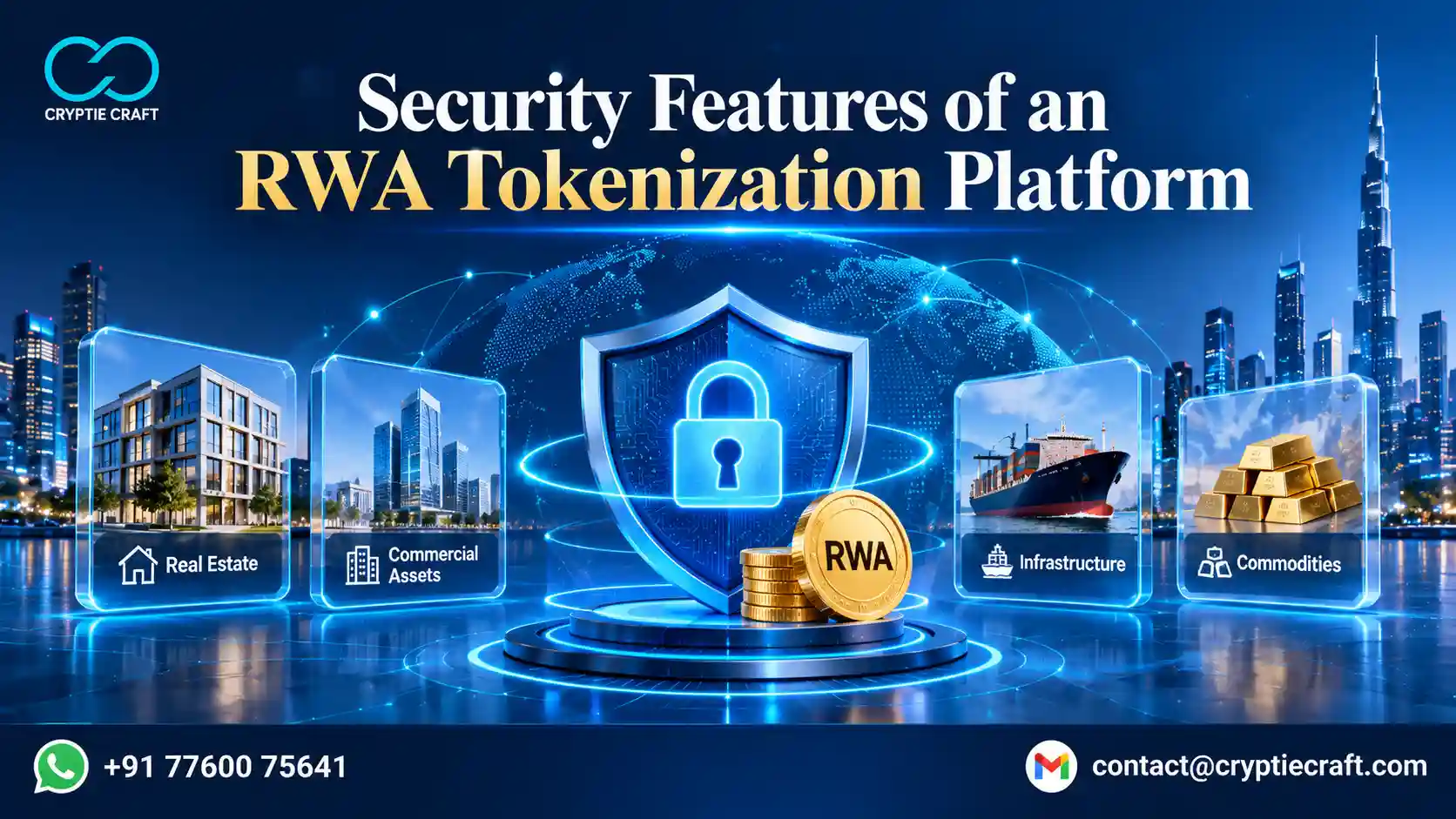
The process of tokenizing real-world assets extends beyond creating digital tokens that represent ownership rights. A platform must also protect the underlying asset records, verify investor eligibility, secure digital wallets, and ensure that token transactions follow the applicable ownership and transfer rules. Weak controls in any of these areas can affect the reliability of the entire tokenization process.
Blockchain provides transparent, tamper-resistant transaction records, but it does not automatically secure legal documents, investor accounts, external integrations, or the infrastructure connected to a tokenized asset. Businesses therefore need a security architecture that addresses both on-chain and off-chain risks.
This article explores the essential RWA tokenization platform security features, the safeguards required throughout its lifecycle, and the criteria businesses should assess before choosing or developing a secure solution.
Why Security Matters in RWA Tokenization
RWA tokenization brings together asset records, investor accounts, smart contracts, wallets, and external services. A security failure can have consequences beyond a compromised system: it may interrupt operations, expose confidential information, enable unauthorized transactions, or create disputes over ownership rights.
For example, a compromised administrator account could allow changes to sensitive platform settings, while a stolen private key could expose the tokens held by a wallet. In another scenario, an exploitable smart contract flaw could affect issuance or transfer rules. These are distinct risks, so platform security must address the people, processes, infrastructure, and code involved in managing tokenized assets.
Key security risks include:
| Security risk | Potential impact |
| Asset ownership discrepancies | Incorrect documentation can create disputes over tokenized ownership rights. |
| Unauthorized platform access | Compromised accounts can expose sensitive information or enable unauthorized actions. |
| Smart contract vulnerabilities | Coding errors can disrupt token issuance and transfer restrictions. |
| Investor data exposure | Weak data protection can expose confidential investor information. |
| Wallet compromise | Stolen private keys can enable unauthorized asset control. |
| Transaction manipulation | Weak controls can allow transfers that violate platform rules. |
A weakness in one control can increase the impact of failures elsewhere. For this reason, security should be designed as a coordinated set of safeguards rather than a collection of isolated technical features.
Essential Security Features of an RWA Tokenization Platform
An RWA tokenization platform relies on several controls to protect its code, users, wallets, data, and transaction flows. The features below explain what each control is intended to protect and how it contributes to platform security.
Smart Contract Security
Smart contracts define how tokens are issued, held, and transferred. Before deployment, developers should review access permissions, validate transaction logic, and test edge cases such as invalid transfers or unexpected inputs. Independent audits can provide an additional assessment of the code, while findings should be resolved and retested before release.
Asset Ownership Verification
Before an asset is tokenized, its supporting evidence should be checked against the ownership rights intended to be represented by the tokens. Depending on the asset, this may involve reviewing title or property records, legal agreements, valuation documents, and other relevant evidence. The verification outcome should be recorded so that the basis for onboarding can be reviewed later.
KYC Verification
Know Your Customer (KYC) verification establishes whether an investor is who they claim to be. Depending on the platform’s requirements, checks may include identity document validation, address verification, and additional identity screening before an account is approved.
AML Screening
Anti-Money Laundering (AML) screening checks investors and relevant counterparties against applicable risk sources. Depending on the jurisdiction and risk assessment, these may include sanctions lists, politically exposed person (PEP) databases, and other relevant watchlists. Screening outcomes should be reviewed and escalated when they require further assessment.
Multi-Factor Authentication
Multi-factor authentication (MFA) requires users to prove their identity through more than one verification method. A platform may combine a password with a one-time password (OTP), an authenticator application, or biometric verification. Stronger authentication is particularly important for accounts with administrative or transaction approval privileges.
Role-Based Access Control
Role-based access control (RBAC) limits what each user can view or change according to their assigned responsibilities. Permissions should follow the principle of least privilege, with sensitive actions restricted to authorized roles and reviewed when responsibilities change.
Secure Wallet Integration
Wallet security depends heavily on how private keys are generated, stored, accessed, and recovered. A platform should document its key custody model, restrict access to key-management functions, and protect key material from unauthorized disclosure. Depending on the custody design, controls may include hardware-backed storage, multi-signature authorization, or multi-party computation (MPC).
Key replacement or wallet migration should follow a defined authorization process. Recovery procedures should also establish how authorized access can be restored through securely protected backup mechanisms after key loss or compromise.
Data Encryption
Sensitive investor information, financial records, and asset documents should be encrypted both at rest and in transit. Encryption keys also require controlled access and secure management; otherwise, the protection provided by encryption may be weakened.
Secure Token Transfer Controls
Before a transfer is executed, the platform should enforce the token’s applicable ownership and eligibility rules. Controls may include approved-wallet lists, investor permission checks, holding limits, or jurisdiction-based restrictions where required by the offering. Screening and transfer requirements should reflect the relevant jurisdiction, asset type, investor category, and legal structure of the offering.
Transaction Monitoring
Transaction monitoring examines activity for patterns that may indicate fraud, account compromise, or policy violations. Alert rules should be based on the platform’s risk profile, and flagged activity should be reviewed, documented, and escalated through a defined process.
Regular Security Audits
Independent security audits provide a structured assessment of the platform’s controls and technical components. Their value depends on the audit scope, the systems and versions examined, the severity of findings, and whether remediation was verified. Penetration testing can complement code and configuration reviews by testing how weaknesses may be exploited in practice.
API Security
APIs connect the platform with services such as payment gateways, identity verification providers, and wallet integrations. Each endpoint should enforce authentication and authorization, validate incoming data, limit abusive request rates, and avoid exposing sensitive information in responses or error messages.
Backup and Disaster Recovery
Backups preserve critical records and configuration data so they can be restored after system failure, data corruption, or a cyber incident. Backup copies should be protected from unauthorized modification, and restoration tests should confirm that recovery procedures work within the business’s required recovery objectives.
How Security is Maintained Throughout the RWA Tokenization Lifecycle
Security responsibilities change as an asset moves through onboarding, issuance, trading, and ongoing management. The checkpoints below show when key validations should occur; they complement the platform features described above rather than repeating how each control works.
Asset Onboarding
At onboarding, the asset review should be completed and its approval status recorded before the asset proceeds to tokenization. Any missing, inconsistent, or disputed evidence should be resolved or escalated rather than treated as approved.
Investor Registration
At registration, the account should not receive investment permissions until the required identity, screening, and eligibility checks have reached an approved outcome. Exceptions and pending reviews should remain distinguishable from approved accounts.
Token Issuance
At issuance, compare the approved token supply and allocation with the asset’s documented tokenization terms. Record the authorization for minting and retain evidence of the final issuance so the token supply can be reconciled later.
Token Transfers
At the point of transfer, confirm that the sender has sufficient holdings and that the recipient and proposed transaction satisfy the asset’s applicable transfer conditions. A failed validation should prevent the transfer from proceeding.
Secondary Market Transactions
For a secondary sale, verify that resale is permitted at that time, that any applicable holding period or trading restriction has been met, and that both parties are eligible to complete the transaction.
Asset Management
When asset information changes, retain the previous and updated records, the time of the change, and the identity of the person or process that authorized it. This creates an auditable history for material updates during the asset’s lifecycle.
Investor Distributions
For each distribution, calculate investor entitlements using the ownership snapshot and terms applicable to that payment date. After processing, reconcile the amounts paid against the amounts due and investigate any discrepancy.
What to Check When Evaluating RWA Platform Security
When evaluating a provider or an internally developed platform, businesses should request evidence that its stated controls are implemented and tested. Focus on reports, architecture documentation, test records, and response procedures rather than relying only on feature lists.
Smart Contract Audit Reports
Request the latest independent audit report, including its scope, assessment date, tested contract versions, findings, severity ratings, and remediation status. Check whether critical findings were fixed and independently retested, and whether material code changes occurred after the audit.
Wallet Security Architecture
Request the wallet and key-management architecture. Establish who controls signing authority, how key access is approved and logged, how key loss is handled, and whether the custody model uses hardware security, multi-signature approval, MPC, or another documented approach.
Security Testing Procedures
Review the scope and date of recent penetration tests, vulnerability scans, and remediation checks. Confirm that testing covers relevant applications, APIs, infrastructure, and deployment environments, and that high-risk findings have been retested after fixes.
Incident Response Capabilities
Ask for the incident response plan and evidence of exercises or previous post-incident reviews where available. Check whether the plan defines decision-making authority, containment steps, stakeholder communications, evidence preservation, and service restoration responsibilities.
Best Practices for Maintaining RWA Tokenization Platform Security
After deployment, security depends on whether controls remain effective as users, integrations, software, and operational requirements change. The practices below describe recurring maintenance activities, not one-time platform features or pre-launch evaluation checks.
| Ongoing practice | Operational focus |
| Review access permissions | Remove outdated access when roles or responsibilities change. |
| Apply security updates | Keep platform components and dependencies current. |
| Reconcile asset and token records | Investigate inconsistencies between off-chain records and on-chain ownership. |
| Monitor platform activity | Triage alerts and investigate unusual account or transaction behaviour. |
| Test backup restoration | Confirm that critical records can be recovered when required. |
| Rehearse incident procedures | Check that response teams understand their roles during a security event. |
Establish Continuous Security Monitoring
Assign clear ownership for reviewing security alerts, documenting investigations, and escalating confirmed incidents. Define response thresholds and review alert quality periodically so that important events are not lost among false positives.
Schedule Regular Vulnerability Assessments
Maintain a testing schedule and repeat assessments after significant code, infrastructure, or integration changes. Track each finding to closure, assign a responsible owner, and verify the fix rather than treating the delivery of a scan report as completion.
Maintain Updated Security Policies
Review security policies whenever platform roles, service providers, regulatory obligations, or operating procedures change. Record approvals and communicate revised responsibilities to the teams expected to follow them.
Launch a Secure Real-World Asset Tokenization Platform with Cryptiecraft
Building a secure RWA tokenization platform requires more than blockchain integration. Businesses must establish reliable asset verification, investor protection, smart contract security, data encryption, and controlled token transfers to safeguard the entire tokenization lifecycle.
Cryptiecraft provides Real-World Asset tokenization platform development services for businesses planning to launch customized tokenization solutions. Development capabilities include security-focused platform architecture, smart contract integration, investor onboarding workflows, digital asset management, asset issuance, ownership management, and token transaction functionality. The platform’s architecture and features can be aligned with the project’s asset type, business requirements, and applicable compliance considerations.
Planning to build an RWA tokenization platform? Connect with Cryptiecraft to discuss your project requirements and development approach.
Frequently Asked Questions
Q1. What makes an RWA tokenization platform secure?
Ans: Security depends on coordinated controls for asset verification, investor eligibility, smart contracts, wallet custody, data protection, and transaction authorization. The exact controls should reflect the asset type, operating model, and applicable requirements.
Q2. How are smart contracts secured in RWA tokenization?
Ans: Use code review, testing, and independent audits before deployment, then reassess the contracts after material changes. Audit findings should be resolved and retested before the affected functionality is relied upon.
Q3. How is investor data protected in RWA tokenization?
Ans: Protect investor records with encryption in transit and at rest, least-privilege access, strong authentication, and controlled retention. Restrict access to encryption keys and log access to sensitive records.
Q4. How can an RWA tokenization platform prevent unauthorized token transfers?
Ans: A platform can enforce approved-wallet rules, recipient eligibility checks, balance validation, and the transfer conditions encoded for the asset. These controls should be tested against both valid and invalid transaction scenarios.
Q5. Why are security audits important for RWA tokenization platforms?
Ans: Audits provide an independent view of control weaknesses and technical risks. Reviewing the scope, severity of findings, remediation evidence, and retesting helps businesses understand whether identified issues have been addressed.
Q6. How often should an RWA tokenization platform undergo security testing?
Ans: Test before launch, repeat assessments on a risk-based schedule, and reassess after significant changes to code, infrastructure, or integrations. The frequency should reflect the platform’s exposure and change rate.