Binance Clone Script
 KuCoin Clone Script
 Bybit Clone Script
 Kraken Clone Script
 OKX Clone Script
 ERC-20 Token Development
 TRC-20 Token Development
 BEP-20 Token Development
 Crypto Token Development
 ICO Development
 STO Development
 Binance NFT Clone
 OpenSea Clone Script
 Rarible NFT Clone
 NFT Marketplace Development
 MetaMask Clone Script
 Trust Wallet Clone Script
 Crypto Wallet Development
 DeFi Wallet Development
 Uniswap Clone Script
 PancakeSwap Clone
 SushiSwap Clone
 Crypto Payment Gateway
 Binance Pay Clone
 Crypto MLM Software
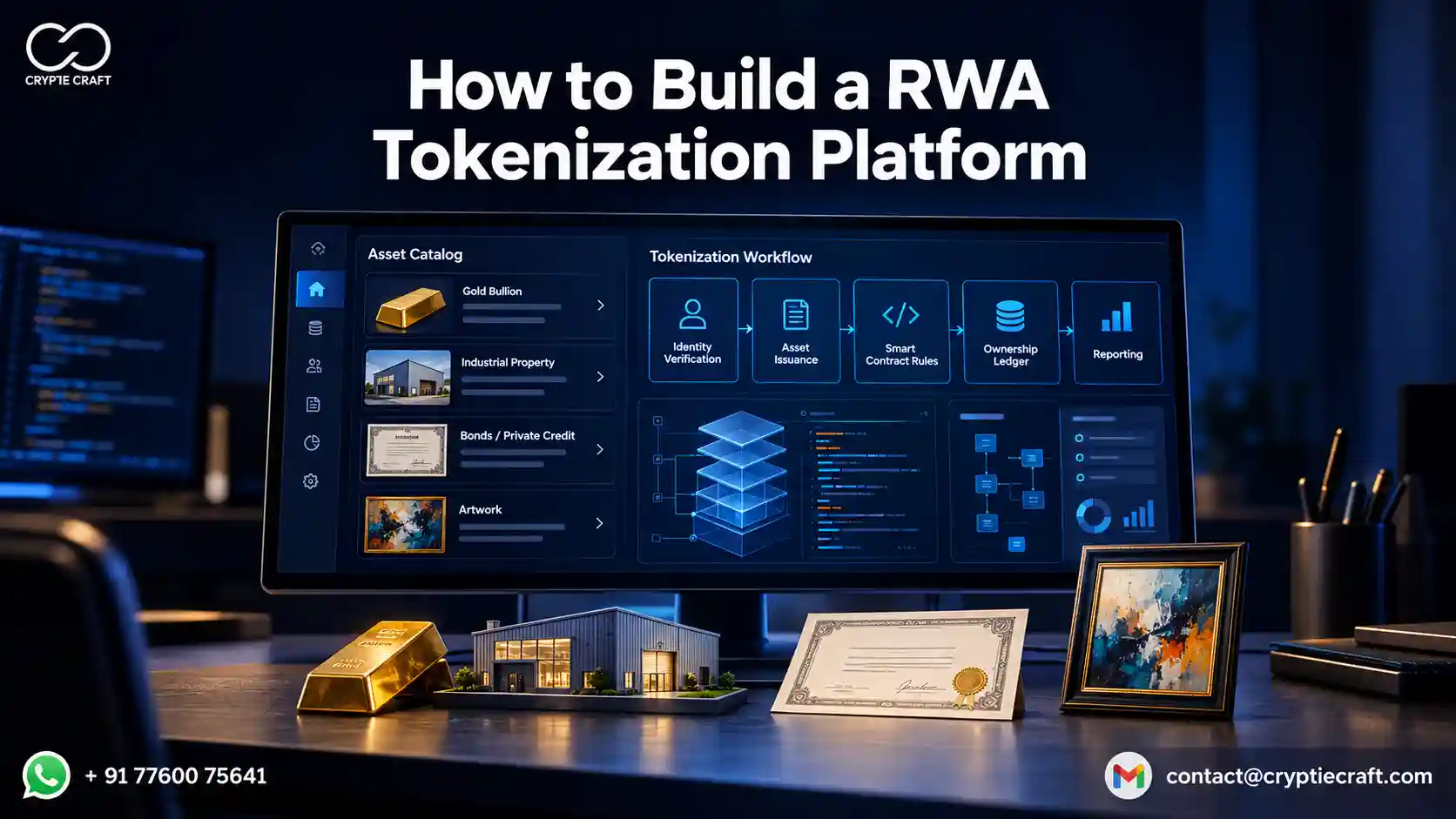
A blockchain can confirm that a token exists. But can it confirm that the person holding it has a valid claim to the asset behind it? A token may be issued successfully even when the investor’s payment remains unsettled or the ownership records are incomplete.
The real challenge is how to build a RWA tokenization platform that prevents these gaps. Asset rights, investor eligibility, payment confirmation, and token ownership must follow clearly defined rules. A mistake in one system can affect the accuracy of records across the entire platform.
Reliable development requires more than functional smart contracts. The software must control when tokens can be issued, verify each transaction before updating holdings, and handle failed operations without creating duplicate allocations or incorrect ownership records. These decisions determine whether the platform can manage real investments safely after launch.
What Should Be Decided Before Developing an RWA Platform?
Tokenizing a property through a holding company is different from issuing a debt claim backed by that property. Both may use blockchain tokens, but the investor rights, ownership records, and operating rules are not the same. These differences must be resolved before development begins.
Five decisions establish the platform’s requirements.
- Asset structure. Determine whether the token represents equity, debt, or a contractual claim to income. Identify the legal documents that establish those rights.
- Ownership register. Decide which record legally establishes ownership and whether blockchain transactions require separate approval to become effective.
- Investor eligibility. Define permitted investors, jurisdictions, and transfer restrictions. Legal advisers should confirm the relevant RWA tokenization regulations before implementation.
- Payment settlement. Establish when a subscription becomes final and how to handle partial payments, reversals, or unsuccessful transfers.
- Operational authority. Assign responsibility for approving issuance, correcting records, processing redemptions, and maintaining the underlying asset information.
Document these decisions in an operating specification, including transactions the software must accept or reject.
How to Build a RWA Tokenization Platform
The development process must turn approved investment rules into software that tracks transactions and maintains consistent records throughout the asset’s lifecycle.
Step 1. Define the Asset Ownership Model
Begin by converting the approved legal structure into a data model the platform can maintain.
In a private credit offering, the loan, issuing entity, debt instrument, and investor holdings are separate records. A token balance alone does not establish legal ownership.
Assign unique identifiers to each asset, issuance, and investor holding. Store the relevant legal document version so the platform can identify which terms applied when an allocation occurred.
Where transfers require registrar approval, keep them pending until authorization is recorded. Blockchain activity must not bypass the official register.
Administrators should be able to trace each holding to its asset, governing instrument, and recorded owner.
Step 2. Design the Platform Architecture
An investor dashboard may display a completed payment, but only authorized backend services should initiate issuance. The RWA tokenization platform architecture must separate display functions from transaction approvals.
During RWA tokenization platform development, assign clear responsibility for each system record.
| Component | Primary responsibility |
| Investor verification | Maintain verified identity status |
| Subscription management | Record approved investment commitments |
| Settlement service | Maintain confirmed payment evidence |
| Blockchain integration | Track token transactions |
| Ownership registry | Maintain recognized investor holdings |
These components may operate within one application; their responsibilities must remain distinct.
Maintain a connection between payment references, approval decisions, and blockchain transactions using a unique subscription ID. Check existing transaction status before retrying timed-out requests.
Disagreements between blockchain holdings and the official ownership register should trigger reconciliation, never automatic replacement.
Step 3. Select the Blockchain Network
Choose a blockchain that supports the asset’s investment rules, not merely attractive transaction fees.
Evaluate potential networks using five questions.
- Transfer restrictions. Can permissioned tokens, such as ERC-3643, restrict transfers to eligible holders?
- Transaction finality. When is a submitted transaction considered complete?
- Investor privacy. Can sensitive information remain securely stored outside the blockchain?
- Infrastructure support. Are compatible wallets, custody services, and node providers available?
- Transaction costs. What will issuance, transfers, and redemptions cost during periods of high network activity?
Test shortlisted networks with identical transfer rules. Verify that unauthorized transfers fail while approved transfers succeed.
Document the confirmation threshold for each transaction type. Include backup node access in the network design so temporary provider outages do not leave issuance requests without a traceable status.
Step 4. Develop the Token Smart Contracts
RWA smart contract development starts with the rules each token must enforce.
Consider this example: A private credit offering authorizes 1,000 tokens. A request to mint 1,001 must fail without changing the supply.
Valid issuance requires an authorized caller, available supply, and an eligible recipient.
Restrictions must remain effective after issuance, including when a wallet’s eligibility is revoked.
ERC-3643 supports these checks through identity registries and compliance contracts. Enable freezing, burning, or recovery functions only when required by the offering.
Test excessive minting, restricted transfers, and revoked permissions. Log privileged actions for review.
Assign separate permissions for issuance, emergency pauses, and contract administration. Require additional approval for sensitive changes so one compromised account cannot rewrite the offering’s token rules.
Step 5. Implement Investor Verification
Eligibility for a particular tokenized offering cannot be determined through identity verification alone.
Build the verification process around three possible outcomes.
- Approved. Required checks are complete, and the investor may subscribe.
- Under review. Additional information or an authorized decision is pending. Subscriptions remain restricted.
- Not eligible. Participation is blocked until the reason for rejection is resolved.
Integrate identity checks, applicable AML screening, and investor classification. Corporate applicants may also need beneficial ownership verification.
Keep identity documents off the public blockchain. Confirm wallet control before linking an approved investor.
Record approval dates, applicable rules, and expiry. Revoked eligibility must reach transfer controls before another restricted transaction.
The verification provider’s response should be recorded as evidence, not treated as permanent approval. Recheck eligibility when the offering requires renewal or an investor’s status changes.
Step 6. Build the Subscription System
A subscription records an investor’s requested allocation without triggering token issuance.
Build the subscription workflow around five actions.
- Capture. Store the asset, quantity, investor ID, and accepted document version.|
- Validate. Check investment minimums, allocation limits, and available units.
- Reserve. Lock units in a database transaction to prevent competing reservations.
- Approve. Record the accepted quantity under a unique subscription ID, pending payment.
- Release. Free reserved units when requests expire or are cancelled.
If only 120 units remain, a request for 200 must fail or receive an authorized smaller offer. Never change the quantity without investor acceptance.
Test simultaneous requests to ensure units cannot be reserved twice.
Also test payment arriving after a reservation expires. The subscription must return for review instead of silently consuming units already assigned to another investor.
Step 7. Integrate Payment Processing
Payment providers can send delayed notifications or repeat an earlier confirmation. The RWA platform must verify each payment independently before updating the subscription status.
Connect every payment attempt to its subscription ID, expected amount, currency, and receiving account.
| Payment method | Required verification |
| Bank transfer | Confirm the payment status, amount, currency, and transaction reference with the banking provider |
| Stablecoin | Verify the blockchain network, token contract, receiving address, transferred amount, and required transaction confirmations |
Store each verified payment using a unique transaction reference. If the provider sends the same confirmation twice, the system must recognize the duplicate without recording another payment.
Partial payments, excess amounts, and unmatched transfers should remain under review until the applicable settlement rules determine how to handle them.
Once payment settlement is confirmed, update the subscription record and provide the issuance system with an approved settlement reference. A payment notification must never trigger token creation directly.
Step 8. Implement Token Issuance
Token issuance should begin only after the platform has an approved allocation and a matching settlement record. Create a unique issuance instruction containing the subscription ID, recipient wallet, token contract, and authorized quantity.
The transaction should move through a controlled sequence.
Approved → Funded → Submitted → Confirmed → Reconciled
Record each status change. When submitting the mint transaction, save its transaction hash and relevant references.
A network timeout does not necessarily mean the mint failed. The issuance service must check the existing transaction and contract events before attempting another submission. An unresolved request must not create a second allocation.
After the transaction reaches the required confirmation threshold, compare the minted quantity with the approved instruction. Update the ownership register through its authorized process.
If the blockchain result differs from the subscription or ownership records, hold the transaction for investigation. RWA token issuance is complete only when the required records have been reconciled.
Step 9. Develop Asset Servicing
RWA asset servicing begins after tokens are issued. A private credit instrument may generate interest payments, while a property investment may distribute rental income. The platform must calculate each investor’s entitlement according to the governing terms.
Consider a private credit offering with 1,000 equal units outstanding. The issuer approves an $8,000 gross interest distribution, allocated proportionally among eligible holders.
An investor holding 25 units on the applicable record date would receive the following amount before any deductions.
$8,000 × 25 ÷ 1,000 = $200
The calculation must use the ownership records recognized by the offering terms at the specified cutoff date. A wallet balance checked on the payment date may produce an incorrect result if ownership has changed.
Store the approved distribution amount, entitlement calculation, applicable deductions, and payment status for every investor.
The servicing module should also record events such as early repayments, defaults, maturity, and redemptions. Generate investor statements and reconciliation reports so administrators can verify that recorded entitlements match approved financial distributions.
Step 10. Deploy the RWA Platform
A successful test offers little assurance if the production environment runs different contract code or grants permissions to the wrong accounts. Deployment must begin with a verified release configuration.
Complete an independent smart contract review before launch. Record the approved contract versions, blockchain network, deployment addresses, administrative roles, and backend configuration. Confirm that production signing keys are protected and emergency controls work as intended.
Next, rehearse operational failures using test assets. Disconnect a payment integration during processing, attempt an action with revoked permissions, and confirm that the system stops unsafe operations. Administrators must receive clear alerts and have enough information to investigate the failure.
Begin live operations with a limited issuance under the approved offering terms. Monitor the initial transactions closely, comparing blockchain events with payment records and the ownership register.
Assign a responsible operator who can suspend new issuance when an unresolved discrepancy appears. Expand platform activity only after the initial transactions have been reconciled successfully.
Common Mistakes When Building an RWA Tokenization Platform
A successful first issuance can conceal problems that appear during valuation changes, restricted transfers, or record corrections.
| Common mistake | Potential consequence | Recommended approach |
| Treating token supply as asset valuation | Token counts stay fixed while asset values change, creating misleading portfolio figures. | Store valuation sources, calculation methods, and effective dates separately. |
| Assuming tokenization guarantees liquidity | Transfer restrictions or insufficient eligible buyers may prevent a sale. | Define permitted resale rules without promising a trading market. |
| Using identical financial rules for every asset | Private credit repayments may be handled incorrectly as property distributions. | Configure servicing rules per issuance and its legal terms. |
| Correcting records without an audit trail | Manual changes can conceal mismatches between financial records and token holdings. | Record approved adjustments with evidence; preserve original entries. |
Test these conditions with realistic investments. Unrestricted demonstration tokens rarely expose problems in asset operations.
Why Choose Cryptiecraft to Build a RWA Tokenization Platform?
An RWA development proposal should specify how failed payments, disputed allocations, and ownership records will be handled. Quoting only for token deployment overlooks the verification providers, custody connections, and servicing rules that affect the cost of RWA tokenization platform development.
Cryptiecraft develops RWA platforms around the asset’s actual operating requirements. Depending on the agreed scope, we build smart contracts, investor portals, payment integrations, and administrative systems. Custom development supports projects with asset-specific workflows.
Planning to build a RWA tokenization platform? Share your asset type, target market, required integrations, and launch goals with Cryptiecraft for a scope review and project estimate.
Frequently Asked Questions
Q1. Can I build a RWA tokenization platform without creating a blockchain?
Ans: Yes. An RWA platform can use an existing network such as Ethereum or Polygon, eliminating the need to develop a separate blockchain.
Q2. Does owning an RWA token mean owning the underlying asset?
Ans: Not necessarily. The token may represent direct ownership, company shares, debt claims, or income rights, depending on the legal agreements.
Q3. Does an RWA tokenization platform need an oracle?
Ans: Only when smart contracts require verified external data. Backend integrations may be sufficient for processing payments, valuations, or asset updates.
Q4. Can an existing investment platform support RWA tokenization?
Ans: Yes. Existing platforms can integrate token issuance, investor verification, and blockchain services when their architecture supports the required changes.
Q5. Can investors sell RWA tokens immediately after purchase?
Ans: Not always. Transfers depend on investor eligibility, holding restrictions, and available trading facilities. Tokenization does not guarantee liquidity.
Q6. What happens if payment succeeds but token issuance fails?
Ans: The platform should retain the payment record, verify the original blockchain transaction, and prevent duplicate issuance before retrying.
Q7. Can investors recover RWA tokens after losing wallet access?
Ans: Recovery may be possible through approved custody procedures or permissioned smart contracts, subject to identity verification and applicable token rules.
Q8. How can an RWA platform verify that tokenized assets remain backed?
Ans: Asset registers, custody evidence, periodic reconciliation, and independent verification can support asset backing. Blockchain transactions alone cannot establish that backing.