Binance Clone Script
  KuCoin Clone Script
  Bybit Clone Script
  Kraken Clone Script
  OKX Clone Script
  ERC-20 Token Development
  TRC-20 Token Development
  BEP-20 Token Development
  Crypto Token Development
  ICO Development
  STO Development
  Binance NFT Clone
  OpenSea Clone Script
  Rarible NFT Clone
  NFT Marketplace Development
  MetaMask Clone Script
  Trust Wallet Clone Script
  Crypto Wallet Development
  DeFi Wallet Development
  Uniswap Clone Script
  PancakeSwap Clone
  SushiSwap Clone
  Crypto Payment Gateway
  Binance Pay Clone
  Crypto MLM Software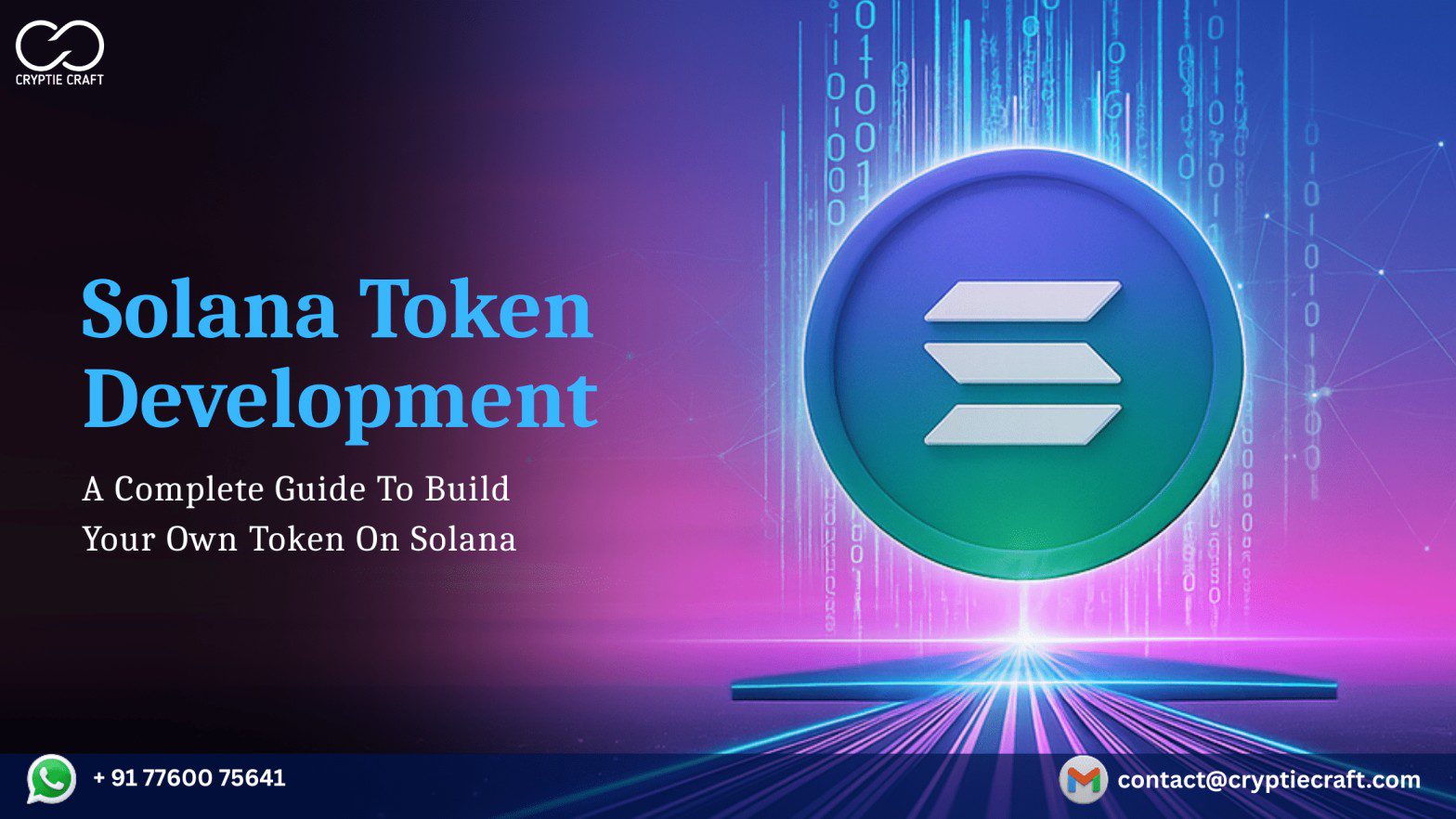
For years, the blockchain sector has been rapidly growing due to its high speed, low cost and scalable ecosystems. It supports millions of users without compromising performance. Among the leading blockchain networks, Solana has emerged as a powerful platform for token development. This rise is because of its friendly development infrastructure, fast transaction processing and growing Web3 ecosystem. Businesses are mostly choosing Solana to launch a scalable digital asset with less operating cost.
Moreover, with the rising adoption of DeFi, NFTs, and Web3 gaming, tokenized assets continue to grow significantly. And Solana token development has become an attractive opportunity for businesses that seek next-gen blockchain solutions.
This guide will explain to you everything about Solana token creation, architecture, benefits, development services, tokenomics and deployment strategies.
What is Solana Token Development?
Solana is a high-performance blockchain platform built for cryptocurrencies and decentralized applications. It stands out for its consensus mechanism called Proof of History (PoH), which timestamps transactions cryptographically before they reach validators. The result is faster, more secure transaction confirmation than most older blockchains can match.
Solana matters in the decentralized ecosystem because it solves the throughput problem that older blockchains struggle with. Networks like Ethereum get congested during peak demand and gas fees spike. Solana handles those same loads at a fraction of the cost, which is why DeFi protocols, NFT projects, and Web3 games that need cheap, fast transactions have migrated to it.
Solana token development refers to the process of creating and deploying digital tokens on the Solana blockchain using an SPL token standard. This is similar to ERC 20 on Ethereum, but are optimized for Solana’s high-performance infrastructure. These tokens are used in DeFi platforms, NFTs, gaming ecosystems, staking systems, and tokenized real-world assets.
Why Choose Solana for Token Building
In creating a Web3 solution, the Solana token is mostly preferred for its speed, affordable charges and strong support system. It is capable of handling over 65,000 transactions per second, which is faster than other blockchain networks.
This speed matters most for applications where every millisecond counts, such as financial services, games, and any platform handling high transaction volume. Solana also has a mature developer ecosystem with extensive libraries, SDKs, the Solana CLI, and third-party tools. Whether your team is new to blockchain or experienced, the tooling makes building on Solana straightforward.
Types of Tokens We Can Build on the Solana Blockchain
Solana supports various digital assets that are customized for different business models, blockchain ecosystems and decentralized applications. Solana provides cost-effective and scalable infrastructure for creating a blockchain token with enhanced performance. There are various types of Solana tokens and let’s discuss them below.
Fungible Tokens
They are interchangeable digital assets where each token has identical value and functionality. These tokens are used for utility assets governance systems and DeFi ecosystem. Fungible tokens are also integrated with the liquidity pools and decentralized exchanges to facilitate token trading. With Solana’s high transaction speed, these assets can support high-frequency trading environments efficiently.
Non-Fungible Tokens
Non-fungible tokens represent unique digital assets stored on the blockchain. NFT projects on Solana are used for digital art collectibles, metaverse projects and property ownership systems. Solana NFT’s gained popularity because minting costs are lower than on other networks. Moreover, the ecosystem supports fast NFT transactions with minimal latency.
Stablecoins
They are blockchain-based digital assets used to stabilize the reserve assets, such as fiat currencies or commodities. Businesses create stablecoins on Solana to support fast payments across border transfers and decentralized financial ecosystems. Further, the transactions are inexpensive in Solana. Solana stablecoins are built to provide efficient settlement systems for merchants and financial applications.
Asset-Backed Tokens
Asset-backed tokens represent ownership of real-world assets such as real estate, gold, stocks, or commodities. These tokens enable fractional ownership and improve liquidity for traditionally illiquid assets. Solana’s scalable architecture allows enterprises to tokenize large asset ecosystems while maintaining transparency and efficient transaction processing.
Meme Tokens
The concept of meme tokens includes creating cryptocurrency tokens based on internet memes or popular culture and trends. Meme tokens can become popular due to viral marketing efforts. Many developers opt for Solana as the blockchain for creating meme tokens, as creating and trading tokens on Solana is economical and scalable.
Community-Driven Assets
Community-driven assets are used by projects to facilitate decentralized governance, loyalty program management, and ecosystem management. The idea behind community-driven assets is engaging users and helping them participate in projects. A project that uses community-driven assets can form a decentralized ecosystem where the userbase contributes to its growth.
Key Benefits of Choosing Solana for Token Development
Nowadays, most of the businesses choose Solana as the most preferred blockchain platform for token development. Further, as the blockchain industry continues to grow, businesses require a network that supports high transaction volumes without increasing the operational cost. Solana addresses these challenges. Some benefits of Solana token development are listed below.
High Transaction Speed
Solana is capable of processing thousands of transactions per second, making it the fastest blockchain network. Its Proof of History consensus mechanism allows efficient transaction sequencing without network congestion. Additionally, high speed infrastructure makes Solana ideal for applications requiring rapid settlements, including gaming systems, exchanges and payment platforms.
Low Network Fees
Solana has significant benefits, including low network charges. With Solana, businesses can process the token transfers and smart contract interactions without concerning about the high gas fees. Lower operational costs improve user experience and make blockchain adoption more accessible for startups and enterprises.
Scalable Architecture
Solana has the feature to support parallel transaction execution, enabling the network to scale efficiently with the increase in user demand. Unlike conventional blockchains, Solana minimizes bottlenecks via optimized infrastructure. This scalability makes the blockchain suitable for enterprise-grade token ecosystems with large transaction volumes.
Strong Ecosystem Support
The ecosystem includes NFT marketplaces, wallets, decentralized exchanges, and DeFi protocols. This extensive infrastructure simplifies token integration and ecosystem expansion. Solana benefits businesses launching a token, as they can gain access to a growing Web3 community and development ecosystem.
Developer Friendly Infrastructure
The network has strong development frameworks, SDKs, and APIs that simplify blockchain application creation. Developers can use Rust and the Anchor Framework to build secure and efficient smart contracts. The ecosystem also supports testing environments and debugging tools that streamline the token deployment process.
Solana Token Development Architecture
Imagine you are going to build a modern digital city where millions of people move freely without traffic jams, delays or expensive tolls. The entire system is organized and highly secured, where every payment interaction and transaction is made instantly. This is how exactly Solana approaches blockchain infrastructure via its advanced token development architecture.
Solana Program Library Structure
The Solana Program Library contains reusable blockchain programs and standards used for token creation. These libraries are used for minting, transfers and account management. This modular structure improves development efficiency and ensures compatibility across the Solana ecosystem.
On-Chain Data Flow
It refers to how the token transactions and smart contracts data move via the blockchain network. Solana processes data using parallel execution models and optimized validators. On-chain data flow ensures faster confirmation times and reduces the latency rate on data flow for token interactions.
Token Mint Authority Control
The mint authority decides who can create or manage the token supply. Developers can configure permissions to allow fixed, inflationary supply, or governance-controlled minting systems. This flexibility enables businesses to implement customized tokenomics models.
Network Transaction Processing
Solana’s runtime engine processes transactions at a speed that older blockchains can’t match. Verification happens quickly while the network stays secure and decentralized, which is critical for high-volume use cases like exchanges, payments, and trading platforms.
Smart Contract Execution Model
Smart contracts are executed in Solana using Rust code. The execution model is optimized for performance and security while supporting complex decentralized applications. This structure enables developers to build scalable DeFi, NFT, and staking ecosystems.
Solana Token Development vs Ethereum Token Development
Ethereum remains one of the most established blockchain ecosystems and Solana comes with better speed and lower transaction costs for many applications. Ethereum provides strong ecosystem maturity and Solana is offered for high-performance applications such as microtransactions and gaming.
Businesses selecting between Solana and Ethereum usually evaluate scalability, fees, ecosystem compatibility, and target audience requirements before choosing a blockchain infrastructure.
| Feature | Solana Token Development | Ethereum Token Development |
| Blockchain Type | High-performance Layer 1 blockchain | Pioneer smart contract blockchain |
| Token Standard | SPL Token Standard | ERC-20 / ERC-721 / ERC-1155 |
| Programming Language | Rust C | Solidity |
| Scalability | High scalability parallel execution | Layer 2 dependent scalability |
| Ecosystem Maturity | Rapidly growing ecosystem | Highly mature ecosystem |
| Ideal Use Cases | Gaming DeFi high speed apps | DeFi NFTs enterprise dApps |
Solana Token Development Services – What We Offer
Solana has changed the process of business in creating and launching blockchain-based digital assets by offering a fast, scalable, and cost-efficient ecosystem. As industries continue adopting decentralized technologies, companies require customized token development solutions. If you are looking for Solana token development services, we, the leading token development company, Cryptiecraft, offer various services. Let’s discuss it below.
ICO Platform Development
We help businesses to raise funds via token sales. These platforms support investors’ onboarding, token distribution and fundraising management systems. Developers also integrate KYC systems and smart contract automation to enhance fundraising security and compliance.
RWA Tokenization Platform Development
The real-world asset tokenization platforms convert physical assets into blockchain-based digital tokens. Businesses can tokenize real estate commodities or financial instruments using Solana infrastructure. This service improves transparency, accessibility and liquidity within traditional investment markets.
STO Platform Development
Security token offering platforms enable compliant fundraising via regulated blockchain securities. These platforms integrate investor verification, regulatory controls and automated asset management systems. STO solutions are becoming increasingly important for institutional blockchain adoption.
DeFi Token Development Services
DeFi token development deals with building tokens in decentralized financial systems like staking, lending, yield farms, and liquidity pools. The speed and low cost of Solana make it a perfect platform for developing DeFi protocols. Businesses are able to develop scalable decentralized finance solutions with optimized transactions.
Token Launchpad Development
Token launchpads provide a platform where companies release their cryptocurrency projects and organize fundraising campaigns. They help in launching tokens, engaging investors, and attracting members of the community. Token launchpads are usually connected to staking and governance features.
Solana Smart Contract Development
Smart contract development involves creating blockchain programs for automation, governance, and decentralized operations. Developers use Rust and the Anchor Framework to build secure Solana programs. These smart contracts form the backbone of token ecosystems and decentralized applications.
Essential Features of Solana Token Development
A successful token development requires more than something simply creating a digital asset on the blockchain. Modern blockchain projects demand advanced functionalities that enhance the decentralized ecosystem with scalability. Here are the top-notch features to integrate into your network.
Token Minting Capability
The token minting functionality allows developers to create and distribute new tokens within the ecosystem. Businesses can configure total supply inflation rules and governance permissions. Minting systems are essential for utility tokens, reward mechanisms and fundraising projects.
Token Burning Functionality
Token burning removes tokens from circulation to reduce supply and increase scarcity. Many projects use this burning mechanisms to manage the inflation and enhance the token value. Automated burn systems can also be integrated with transaction-based fee structures.
Transfer Mechanism
Token transfer functionality enables secure peer-to-peer asset transactions across the network. Solana supports rapid and low-cost transfers, which are suitable for high-frequency operations. Efficient transfer mechanisms enhance the usability across exchanges, wallets, and DeFi ecosystems.
Metadata Management
The metadata system stores token information such as names, images, ownership details and attributes. This feature is essential for NFTs and gaming assets. Well structured metadata surges the interoperability across the application and marketplaces.
Upgrade Support System
An upgrade system is one that allows you to change or update your token contract after deploying on the blockchain. Developers can implement new features and fix bugs. Proper controls are necessary to maintain decentralization.
Security Features of Solana Token Development
Security is the vital feature of blockchain development because when a small vulnerability occurs, it could lead to financial loss or operational failures.
As decentralized applications and token ecosystems grow significantly, businesses launching tokens on Solana must prioritize advanced security mechanisms to secure the user assets, transaction integrity and ecosystem stability.
Smart Contract Auditing
This feature is used to identify vulnerabilities before the project deployment. Continuous auditing reduces the chances of financial risk.
Wallet Key Protection
It is required for protecting token administrative permissions and token ownership. Developers implement encrypted storage systems and multisignature wallets to minimize the risk.
Access Control Mechanism
This mechanism defines who can modify the smart contracts, manage ecosystem operations and mint tokens. Proper permissions management boosts the platform’s security,
Exploit Prevention System
Token-based systems utilize exploit prevention techniques such as protection against flash loans, reentrancies, and transaction manipulation in order to safeguard against attacks on the system.
Runtime Security Validation
Runtime security validation involves checking the processes of the blockchain in real-time to detect any irregularities or malicious behavior.
Use Cases of Solana Token Development
From powering decentralized ecosystems to enabling global payment systems, Solana tokens can be customized for multiple business models and use cases. The flexibility of the Solana blockchain allows developers to build innovative applications that support high user activity without compromising scalability or transaction efficiency. Here are some use cases of Solana Token Development:
Decentralized Finance Applications
DeFi protocols use Solana tokens for governance, staking rewards, liquidity provision, and protocol fees. Low transaction costs make high-frequency DeFi operations financially viable in a way Ethereum mainnet can’t match.
Non-Fungible Token Ecosystems
Solana powers some of the largest NFT projects in crypto. Minting costs of cents instead of dollars opened NFT creation to creators who couldn’t afford Ethereum gas fees, growing the ecosystem rapidly.
Web3 Gaming Platforms
Gaming projects use Solana tokens for in-game currencies, player rewards, and asset trading. Sub-second confirmation and tiny fees make microtransactions practical, which is the foundation of any working play-to-earn economy.
Real-World Asset Tokenization
Businesses tokenize real estate, commodities, and financial instruments as Solana SPL tokens. Fractional ownership becomes possible, illiquid assets gain liquidity, and ownership records are transparent and auditable on-chain.
Decentralized Autonomous Organizations
DAOs issue governance tokens on Solana that let community members vote on proposals, treasury allocations, and protocol changes. The low transaction cost means voting participation isn’t priced out by gas fees.
Payment and Settlement Systems
Solana’s near-instant finality and sub-cent fees make it ideal for crypto payment rails. Merchants accept tokens directly with minimal overhead, and cross-border transfers settle in seconds rather than days.
Metaverse Economy Systems
Metaverse platforms launch their economies on Solana, like virtual land, in-world currency, wearables, and digital goods, all issued as SPL tokens. Speed and cost matter more here than in any other use case.
Cross-Border Remittance Solutions
Stablecoins issued on Solana let workers send money across borders in seconds for a fraction of the traditional Western Union-style fee. Adoption is growing fastest in Southeast Asia, LATAM, and parts of Africa.
Tokenomics Design for Solana Tokens
Tokenomics is responsible for determining the sustainability, utility and growth potential of a blockchain project. Solana’s economic structure combines inflationary reward systems, token burning mechanisms, staking incentives and governance participation to create a sustainable blockchain environment.
Incentive Distribution System
The system rewards users, validators, liquidity providers, and community participants for contributing to ecosystem growth. Solana token projects often distribute rewards through staking programs, yield farming, governance participation and referral systems.
Staking Reward Model
This model enables the token holders to stake their tokens in order to secure and validate the blockchain network. Solana Proof of Stake blockchain infrastructure supports long-term staking and token locking processes for the benefit of network decentralization.
Supply Model Structure
This structure explains the method for creation and management of the tokens. The Solana based tokens can employ either an inflationary or deflationary supply model depending on the intended purpose of the tokenization process.
Utility Design Framework
This framework helps to determine the operation of the token in the blockchain environment. Token usage includes transaction payments staking and other purposes.
Liquidity Allocation Strategy
Liquidity allocation strategy ensures the availability of sufficient tokens across exchanges, liquidity pools, and DeFi platforms. Projects allocate a portion of their token supply for decentralized exchange liquidity, market-making activities, ecosystem partnerships, and trading incentives.
Cost of Solana Token Development
Imagine two companies are deciding to launch a crypto token on Solana. One company needs a simple utility token for community rewards and basic transactions. On the other hand, the second company plans to build a complete Web3 ecosystem with staking governance, DeFi integration, NFT compatibility, smart contract automation, and exchange listings. Even though both projects are launching on the same blockchain, their goals are different and therefore, the cost also differs.
Solana token development cost ranges from $5,000 to $80,000+, depending on complexity. A simple SPL utility token with basic features starts around $5,000-$10,000. Mid-tier projects with staking, governance, and tokenomics design land between $ 15,000 and $ 35,000. Complex ecosystems with smart contract automation, DeFi integration, and full Web3 features push toward $50,000-$80,000+. The biggest cost drivers are smart contract complexity, security audits, wallet integrations, and exchange listing support.
| Tier | Cost (USD) | Timeline | What’s Included |
| Basic SPL Token | $5,000 – $10,000 | 1 – 2 weeks | Standard SPL token, supply config, basic metadata, wallet integration, mainnet deployment |
| Utility Token | $10,000 – $25,000 | 2 – 4 weeks | Basic + custom tokenomics, staking module, vesting, light smart contract logic, security audit |
| Advanced Token | $25,000 – $50,000 | 4 – 8 weeks | Utility + governance, DeFi integration, liquidity pools, multi-wallet support, full audit |
| Enterprise Ecosystem | $50,000 – $80,000+ | 8 – 16 weeks | Full ecosystem build, NFT integration, exchange listing support, RWA tokenization, ongoing compliance |
Businesses should evaluate long-term operational requirements before estimating total project costs. Choosing an experienced blockchain development company helps optimize development timelines and reduce deployment risks.
Step-by-Step Process to Create a Token on Solana
Building a successful token requires careful planning, proper tokenomics design, testing and launch to ensure long-term functionality and growth. Here are the process on how our developers build Solana token.
Requirement Analysis
This is the initial step, where we analyse the client’s business goals, token utility compliance needs, and technical requirements. Before starting a project, clear planning is required for long-term scalability.
Architecture Planning
In this phase, developers design blockchain architecture, tokenomics structure and government ecosystem. Proper architecture development is important as it minimizes the future scalability limitations.
Smart Contract Development
Smart contract development is vital to avoid financial risk. It is usually coded using Rust and the Anchor Framework to implement token functionalities and automation systems.
Token Creation
The SPL token is created and configured with supply structures mint authorities and metadata systems. Businesses may also integrate staking and reward functionalities.
Security Validation
Continuous testing and auditing are required to ensure the smart contract functions securely before deployment. Security validation is essential for protecting user funds and platform integrity.
Testing
Projects are deployed in test environments to evaluate performance, scalability, and transaction handling capabilities. Testing helps identify vulnerabilities and operational issues.
Mainnet Launch
After successful testing, the token is deployed on the Solana mainnet for public access and ecosystem integration. Mainnet deployment includes wallet and exchange compatibility verification.
Post Launch Support
Ongoing maintenance includes performance monitoring, upgrades, liquidity management, and security improvements. Continuous support ensures long-term ecosystem sustainability.
Post-Launch Growth Strategy of Solana Token Development
Launching a token on Solana is just a beginning the real challenge starters after deployment. The projects that are launched must attract users, build liquidity, maintain community engagement and create a long term utility within the blockchain ecosystem. Many projects fail due to lack in post launch growth strategy.
Liquidity Pool Setup
This setup enable token trading within decentralized exchanges by providing accessible market liquidity. Trading efficiency and price stability improve proper liquidity allocation. Projects often incentivize liquidity providers via stalking rewards and yield farming programs.
Exchange Listing Strategy
Token exposure and accessibility are increased through exchange listings. Firms normally choose decentralized exchange listings prior to moving to centralized exchanges. Strategic listing partnerships increase trading volume and ecosystem growth.
Community Growth Plan
Projects must have strong communities for their continued success and adoption. User interaction takes place via campaigns on social media, taking part in governance and receiving rewards.
Marketing Campaign Execution
Consistent branding and communication are required to strengthen the market position. Strategies such as influencer partnerships, content marketing, PR campaigns and ecosystem collaborations can increase awareness and attract investors.
Long-Term Adoption Strategy
Growth can be achieved with consistent improvement and partnership efforts within the ecosystem. Businesses should focus on adoption rather than short-term hype.
Regulatory Compliance Framework for Solana Token Development
As blockchain adoption continues to expand, there are certain regulatory compliance requirements vital for successful token development. Below, we have mentioned some regulatory standards to be adopted.
KYC AML Verification
This standard helps the system to identify users and prevent illegal financial activities. It improves transparency and regulatory trust.
FATF Compliance Standards
FATF standards establish anti-money laundering guidelines for virtual asset service providers. Most of the projects align with these requirements.
MiCA Regulatory Framework
The MiCA regulatory framework sets up crypto regulations for digital asset providers. Business operators seeking out European markets will be bound by these regulations. The MiCA regulatory framework emphasizes transparency, investor protection, and operational responsibility.
Global Jurisdiction Compliance
Various countries have different crypto regulations. Operators looking to launch token ecosystems globally should take time to assess the regulations in each of these jurisdictions.
Risk Management Strategy
Risk management includes operational security, compliance monitoring, and contingency planning. Strong governance structures reduce exposure to financial and legal threats.
Common Challenges in Solana Token Development
Though Solana token development provides various benefits, there are certain challenges experienced during and post launch.
Network Congestion Issues
Solana has historically suffered occasional network outages during periods of extreme traffic. Recent upgrades have improved stability, but builders should design for graceful degradation during peak load.
Smart Contract Vulnerabilities
Rust-based smart contracts demand specialized skill to write securely. Bugs in token logic or access controls can lead to drained funds. A proper third-party audit isn’t optional, but it’s the difference between a successful launch and a post-mortem.
Liquidity Management Problems
New Solana tokens often launch with thin liquidity. Without enough depth in DEX pools, prices swing wildly and traders avoid the token. Bootstrapping liquidity through incentives or market-maker partnerships is critical in the first 90 days.
Regulatory Uncertainty
Crypto regulations vary dramatically by jurisdiction. A token that’s legal in El Salvador may trigger securities rules in the US. Projects launching globally need region-specific legal review before public distribution.
Adoption Barriers
Even technically sound tokens fail without users. The hardest challenge isn’t building the token, but building the community, partnerships, and use cases that drive sustained demand. Marketing budget often exceeds the development budget.
Tech Stack for Solana Token Development
Here are the top technologies we use to build a Solana token.
- Smart Contract Development: Rust, Anchor Framework
- Blockchain Layer: Solana Program Library, Solana CLI
- Wallet Integration: Phantom Wallet, Solflare Wallet
- Development Environment: Devnet, Testnet, Mainnet
- Security Layer: Audit Tools, Static Analysis Tools
Why Choose Cryptiecraft as Your Solana Token Development Company?
Cryptiecraft, a leading token development company, delivers customized Solana token development solutions for startups, enterprises, DeFi platforms, NFT marketplaces and Web3 ecosystems. Our professional developers are specialized in creating scalable SPL tokens, secure smart contracts, staking platforms and decentralized financial infrastructures optimized for high performance.
We focus on security, scalability and regulatory compliance and help businesses to launch token ecosystems that support long-term growth. From tokenomics planning and smart contract development to liquidity management and exchange integration, we provide complete blockchain development support.
Our expertise in Solana architecture enables businesses to build fast, low-cost, and future-ready blockchain solutions capable of serving global audiences efficiently.
Frequently Asked Questions
Q1. How much does it cost to create a Solana token?
Ans: The actual cost of Solana token development depends on various factors such as complexity, smart contract functionality, integration and security auditing.
Q2. How long does it take to launch a Solana token?
Ans: The time taken for basic token development may take few days, while a complex ecosystem with high-tech features requires several weeks or months.
Q3. What is the gas fee for creating a token on Solana?
Ans: The transaction fees are extremely low compared to other blockchains, making token creation and transfers highly cost-efficient.
Q4. How are Solana tokens stored in wallets like Phantom?
Q5. Can Solana tokens be bridged to other blockchains?
Ans: Yes, the Solana token can be bridged to other blockchain ecosystems for broader interoperability.
Q6. How do staking rewards work in Solana tokens?
Ans: In the staking systems, users lock the tokens and receive rewards based on participation duration and staking rules defined by the platform.
Q7. Is Solana token development secure for startups and enterprises?
Ans: Yes, it is more secured when implemented with audited smart contracts, strong access controls and secure infrastructure.
Q8. Can Solana tokens be used for RWA tokenization?
Ans: Solana supports real-world asset tokenization for real estate, commodities, and financial assets.
Q9. Why is Solana preferred for high-speed token creation?
Ans: It is due to its high throughput, low transaction fees, and scalable infrastructure optimized for rapid blockchain operations.
Q10. How do liquidity pools work for Solana tokens?
Ans: Liquidity pools allow users to supply tokens into decentralized exchanges, enabling seamless trading while earning rewards from transaction fees.