Binance Clone Script
 KuCoin Clone Script
 Bybit Clone Script
 Kraken Clone Script
 OKX Clone Script
 ERC-20 Token Development
 TRC-20 Token Development
 BEP-20 Token Development
 Crypto Token Development
 ICO Development
 STO Development
 Binance NFT Clone
 OpenSea Clone Script
 Rarible NFT Clone
 NFT Marketplace Development
 MetaMask Clone Script
 Trust Wallet Clone Script
 Crypto Wallet Development
 DeFi Wallet Development
 Uniswap Clone Script
 PancakeSwap Clone
 SushiSwap Clone
 Crypto Payment Gateway
 Binance Pay Clone
 Crypto MLM Software
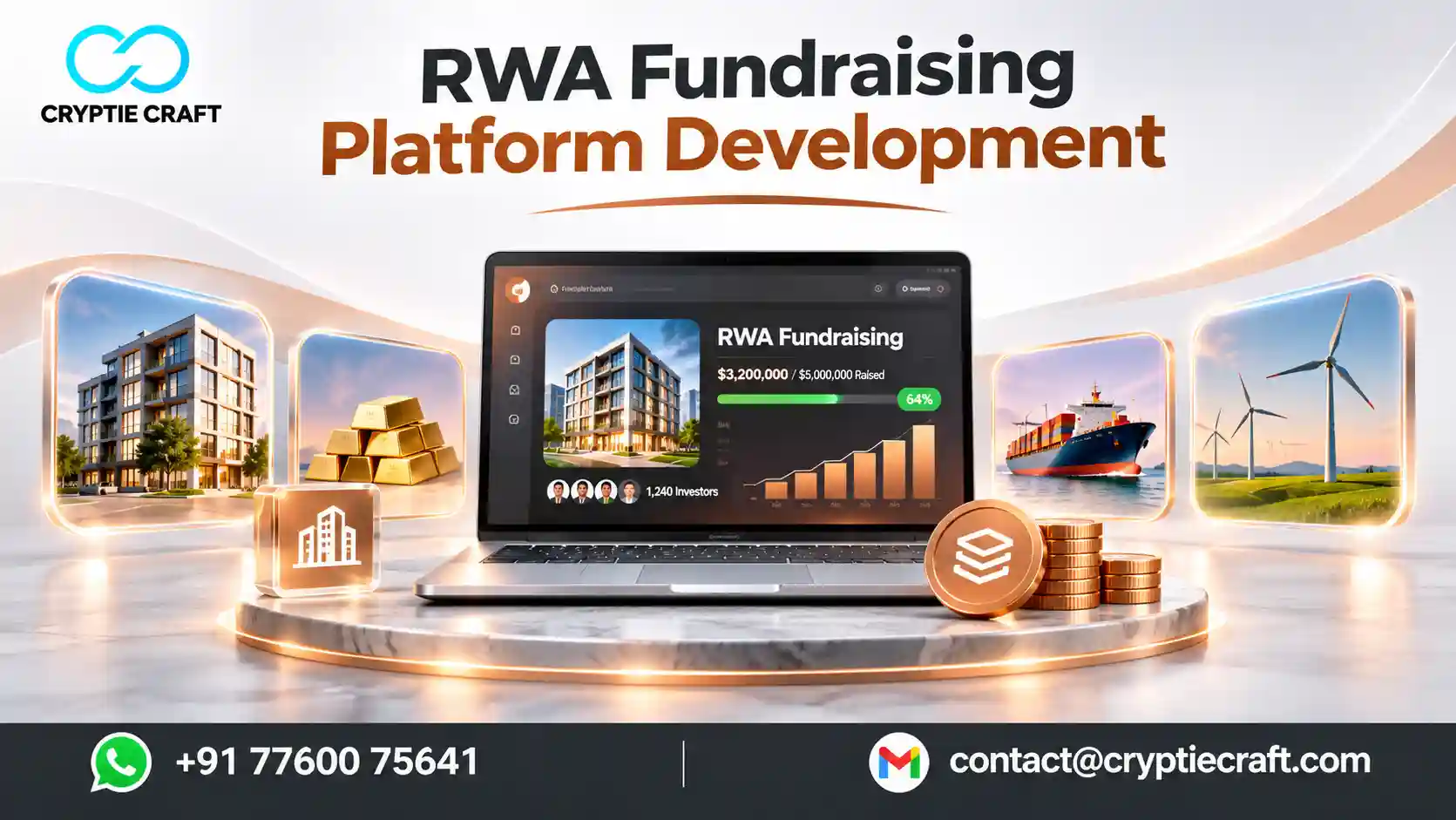
A tokenized asset offering involves more than converting property, private credit or commodities into digital tokens. It requires a defined investment structure that explains what investors are subscribing to, what rights they receive and how their funds are handled. Issuers must also establish investor eligibility, subscription terms, payment procedures and token allocation rules before an offering can accept investments. Without these arrangements, token issuance alone cannot support a properly managed fundraising operation.
RWA fundraising platform development provides the digital infrastructure to coordinate these requirements. An RWA fundraising platform brings offering configuration, investor onboarding, subscription management, payment reconciliation and token allocation into a connected workflow. It also supports accurate investor records and visibility into fundraising activity.
The following sections cover fundraising models, platform features, technology and development requirements.
What Is an RWA Fundraising Platform?
An RWA fundraising platform is a digital solution that enables asset issuers to raise capital by offering investment interests linked to real-world assets. It combines asset representation, investment offering management and investor participation within a structured digital environment. Depending on the investment structure, the underlying assets may include real estate, private credit, commodities or other eligible asset classes.
RWA fundraising software supports offering configuration, investor registration, subscription management and token allocation. It also records investment commitments, completed payments and issued tokens.
A tokenized fundraising platform connects the asset or investment vehicle with the digital infrastructure used to manage capital raising. Offering documents and the legal structure determine investor rights. The token must reflect that structure in its design, as required in asset-backed token development.
How Does Tokenized Fundraising Work?
Tokenized fundraising links a real-world asset with an investment offering represented through digital tokens. Its stages define how the offering is prepared, subscribed to and allocated.
1. Asset assessment
The issuer evaluates the underlying asset, verifies its documentation and determines the legal structure through which investment interests will be offered.
2. Offering configuration
The fundraising terms are established, including the target amount, token price, minimum investment, subscription period and investor eligibility criteria.
3. Investor registration
Interested participants create accounts on the RWA fundraising platform and provide the information required for identity verification.
4. Subscription submission
Eligible investors review the offering documents, agree to the subscription terms and submit their investment applications.
5. Payment confirmation
The platform records incoming payments and checks whether the received amount matches the submitted subscription.
6. Token allocation
Accepted subscriptions determine the number of tokens assigned to each investor. Smart contracts can automate issuance according to predefined allocation rules, subject to required issuer approvals and off-chain checks.
7. Investor record management
The platform maintains records of subscriptions, payments and token allocations, allowing issuers to monitor the offering after its closure.
The platform connects asset information with investor participation, while the legal agreements establish the rights represented by the tokens.
RWA Fundraising Models for Asset-Backed Investments
The fundraising model defines the financial relationship between the issuer and investors. It determines whether capital is raised through ownership interests, borrowing arrangements, revenue participation or pooled investments. The choice also depends on the underlying asset, including the different types of tokenized assets and the investment structure used to represent them.
1. Equity-Based Tokenized Fundraising
Investors receive tokenized interests representing shares in a company or legally established investment vehicle. Their rights may include distributions or voting privileges, depending on the governing agreements.
2. Debt-Based Tokenized Fundraising
Investors provide capital under a debt arrangement and receive contractual repayment rights. The terms may specify interest payments, maturity dates and repayment conditions.
3. Revenue-Sharing Fundraising
Investors receive a defined share of revenue generated by an asset or business. The agreement sets out the procedures for calculating, distributing, and reporting revenue.
4. Fund-Based Tokenized Investment
Capital is pooled into an investment fund that holds or manages selected real-world assets. Tokens represent interests in the fund, subject to its governing documents and distribution terms.
The selected fundraising model also determines the token structure, investor documentation, allocation rules and transfer restrictions. In an equity-based offering, for example, a token may represent shares in an SPV holding the underlying asset, whereas a debt-based offering represents repayment rights defined by the borrowing agreement.
Essential Features of RWA Fundraising Software
RWA fundraising software must support offering preparation, subscription handling and investor record management. Each feature serves a specific purpose in the fundraising lifecycle.
1. Asset Offering Management
Issuers need a central workspace to create investment offerings, upload asset documents, define fundraising targets and publish subscription terms. Each offering should have its own records, conditions and status.
2. Investor Portal
The investor interface displays asset information, offering documents, investment terms and subscription status.
3. Investor Verification
The platform should collect identity details, supporting documents and eligibility information. Verification results determine whether an applicant can proceed with a particular offering.
4. Subscription Management
This feature records investment applications, requested amounts, accepted subscriptions and rejected applications. It helps maintain an accurate account of investor commitments against the offering target.
5. Payment Reconciliation
Payment records must be matched against individual subscriptions. The system should distinguish pending payments, confirmed receipts, failed transactions and refunds.
6. Token Issuance Management
Token allocation should follow the accepted subscription amount and the offering’s predefined rules. Permissioned issuance controls can restrict distribution to approved investor wallets.
7. Investor Reporting
Issuers can review fundraising progress, subscription activity, payment status and token allocations through reports.
Investor Onboarding in a Tokenized Fundraising Platform
Investor onboarding establishes who can participate in a tokenized offering through information collection, verification and eligibility checks.
1. Investor Registration
Investors create an account by providing basic personal or business information, contact details and identification documents.
2. Identity Verification
KYC and KYB checks help verify individual investors and corporate entities. The level of additional due diligence may vary depending on the investor profile and offering requirements.
3. Investor Eligibility Assessment
The platform evaluates whether an applicant meets the offering’s participation criteria. These may include accreditation status, investment limits, residency restrictions and jurisdiction-specific conditions.
4. Subscription Agreement Approval
Eligible investors review the offering documents and accept the applicable subscription terms. Their acceptance is recorded before the investment application proceeds.
5. Wallet Verification
The investor provides a compatible blockchain wallet address. The platform verifies the wallet against its permissioned issuance rules before tokens can be allocated.
Investor access and participation rules must reflect the applicable RWA tokenization regulations. Verification records should be protected through appropriate access controls and data safeguards.
RWA Token Issuance, Payment Processing and Fund Allocation
Once an investor submits a subscription, the platform must establish whether the payment has been received, whether the application can be accepted and how many tokens should be allocated. These stages need separate records because a submitted payment does not automatically confirm an accepted investment.
| Transaction stage | Platform responsibility |
| Payment initiated | Record the payment reference and subscription ID. |
| Payment confirmed | Match the received amount with the investor’s application. |
| Subscription accepted | Check the offering conditions before approving the investment. |
| Token allocation | Calculate the token quantity based on the accepted investment and offering price. |
| Issuance completed | Record the blockchain transaction and update the investor’s balance. |
Example of Token Allocation
Suppose an investor’s accepted subscription is worth $10,000 and the offering price is $100 per token.
Token Allocation = $10000/$100 = 100
The investor receives 100 tokens, subject to the offering terms and successful completion of the issuance process.
Smart contracts can enforce allocation limits, approved wallet addresses and transfer restrictions. The platform should also retain payment references and issuance records so that off-chain subscription data can be reconciled with on-chain transactions. These controls should align with the platform’s RWA security requirements.
Technology Stack for RWA Fundraising Platform Development
The technology stack connects issuer and investor interfaces with subscription records, payment services and blockchain transactions. Each layer has a distinct role in keeping the fundraising process consistent.
| Layer | Technology options | Purpose |
| Frontend | React.js, Next.js | Issuer dashboards and investor interfaces |
| Backend | Node.js, Python | Offering logic, subscriptions and investor records |
| Database | PostgreSQL, MongoDB | Asset details, applications and transaction records |
| Blockchain | Ethereum, Polygon, Avalanche | Token issuance and on-chain transactions |
| Smart contracts | Solidity | Allocation rules and permissioned token transfers |
| Integrations | Payment APIs, KYC/KYB APIs, wallet services | Payments, investor verification and wallet connectivity |
The frontend displays offering terms, account status and subscription progress. Backend services validate applications, apply eligibility rules and coordinate payment and issuance events. The database stores investor profiles, subscriptions, payment references and allocation status, providing records to reconcile off-chain activity with blockchain transactions.
The blockchain records token issuance and permitted transfers. Network selection should consider transaction costs, security, ecosystem support and the token standard required by the investment structure. Smart contracts can enforce allocation rules and wallet restrictions, while issuer approvals and off-chain checks remain part of the issuance workflow.
Payment, KYC/KYB and wallet integrations connect the platform with external providers. The system must distinguish pending, failed and confirmed responses. The final selection of networks, standards and infrastructure should follow functional requirements and the RWA tokenization technology stack.
Compliance Requirements for RWA Tokenized Fundraising
Compliance requirements depend on the asset, investment structure, investor location and offering jurisdiction. The platform must support relevant controls during registration, subscription approval and token transfers.
Investor identity and due diligence
KYC and KYB procedures help verify individual investors and corporate entities. Additional checks may be required to assess the source of funds, beneficial ownership and investor risk.
Securities classification
Tokenized investment interests may fall under securities regulations depending on their legal structure and economic rights. The offering must be assessed under the applicable laws rather than classified solely by the technology used.
Investor eligibility restrictions
Some offerings may be limited to accredited, professional or otherwise eligible investors. The platform should apply relevant access conditions before accepting subscriptions.
Token transfer restrictions
Permissioned token controls can restrict transfers to approved wallets and prevent transactions that violate defined eligibility rules. Transfer conditions should reflect the applicable offering requirements.
Documentation and transaction records
Offering documents, investor agreements, verification results, subscription approvals and token transactions should be maintained for compliance reviews and audit purposes.
The applicable requirements must be assessed for each target market. For example, the US Securities and Exchange Commission framework and the European Union’s ESMA regulatory framework involve different regulatory considerations. A platform can support compliance controls, but it does not replace legal advice, regulatory authorisation or the issuer’s responsibilities.
How to Build a Custom RWA Fundraising Platform
Building a custom RWA fundraising platform requires a clear understanding of the investment model, issuer requirements and investor journey. The development scope should reflect how offerings are created, subscriptions are accepted and token allocations are managed. A broader RWA platform development process helps define the technical requirements beyond the fundraising modules.
- Fundraising requirements: Define the asset category, investment structure, fundraising target, subscription conditions and investor eligibility rules before planning the platform architecture.
- Platform architecture: Establish how the issuer dashboard, investor portal, backend services and blockchain network will communicate. The architecture must maintain consistency between investor records and token transactions.
- Module development: Build the essential components for offering management, investor registration, subscription processing, payment tracking and token allocation. Each module should reflect the selected investment model.
- External integrations: Connect identity verification providers, payment services, blockchain wallets and other required third-party systems.
- Testing and deployment: Validate subscription calculations, payment reconciliation, investor permissions, smart contract execution and token transfers before launching the platform.
The development scope also influences the project budget. Blockchain selection, custom integrations, compliance requirements and platform complexity are among the factors that affect RWA tokenization platform development cost.
Build Your RWA Fundraising Platform With Cryptiecraft
A successful RWA fundraising platform must reflect the investment structure, investor requirements and operational workflow behind each offering. Cryptiecraft develops custom RWA tokenization platforms with capabilities designed around these requirements. Whether the project involves equity-based offerings, debt instruments or revenue-sharing investments, the platform architecture should support the corresponding subscription conditions, investor records and token allocation rules.
Our approach to RWA fundraising platform development focuses on connecting asset management, offering configuration, investor onboarding, payment processing and smart contract functionality within a unified solution. The platform can also incorporate permissioned token transfers, wallet integrations and reporting capabilities based on the selected investment model.
Discuss your RWA fundraising platform requirements with Cryptiecraft and plan a solution around your investment model.

Frequently Asked Questions
Q1. What Is an RWA Fundraising Platform?
Ans: An RWA fundraising platform is a digital system that helps issuers present asset-backed investment offerings, onboard eligible investors, process subscriptions, track payments and allocate tokens under defined offering terms.
Q2. How Does Tokenized Fundraising Work?
Ans: Tokenized fundraising converts legally defined investment interests into blockchain-based tokens, allowing eligible investors to subscribe to asset-backed offerings under specified investment terms and receive corresponding allocations.
Q3. Does an RWA Token Represent Direct Ownership of an Asset?
Ans: No. An RWA token does not automatically confer direct ownership of the underlying asset. Its legal rights depend on offering documents, issuer structure and applicable law.
Q4. How Do Investors Receive Tokens Through an RWA Platform?
Ans: Investors complete verification, submit subscriptions and make payments. Once the issuer accepts their applications, the platform coordinates token allocation according to the offering terms.
Q5. Does Tokenization Guarantee Liquidity for Real-World Assets?
Ans: No. Tokenization does not guarantee liquidity. Investors need an eligible secondary market, sufficient buyers and applicable transfer permissions to sell their tokens.
Q6. What Compliance Requirements Apply to RWA Fundraising Platforms?
Ans: RWA fundraising platforms may require KYC, KYB, AML checks, investor eligibility controls, securities-law compliance and restricted token transfers, depending on the offering’s jurisdiction.